
Preview in:
Top 6 face search tools in 2026:
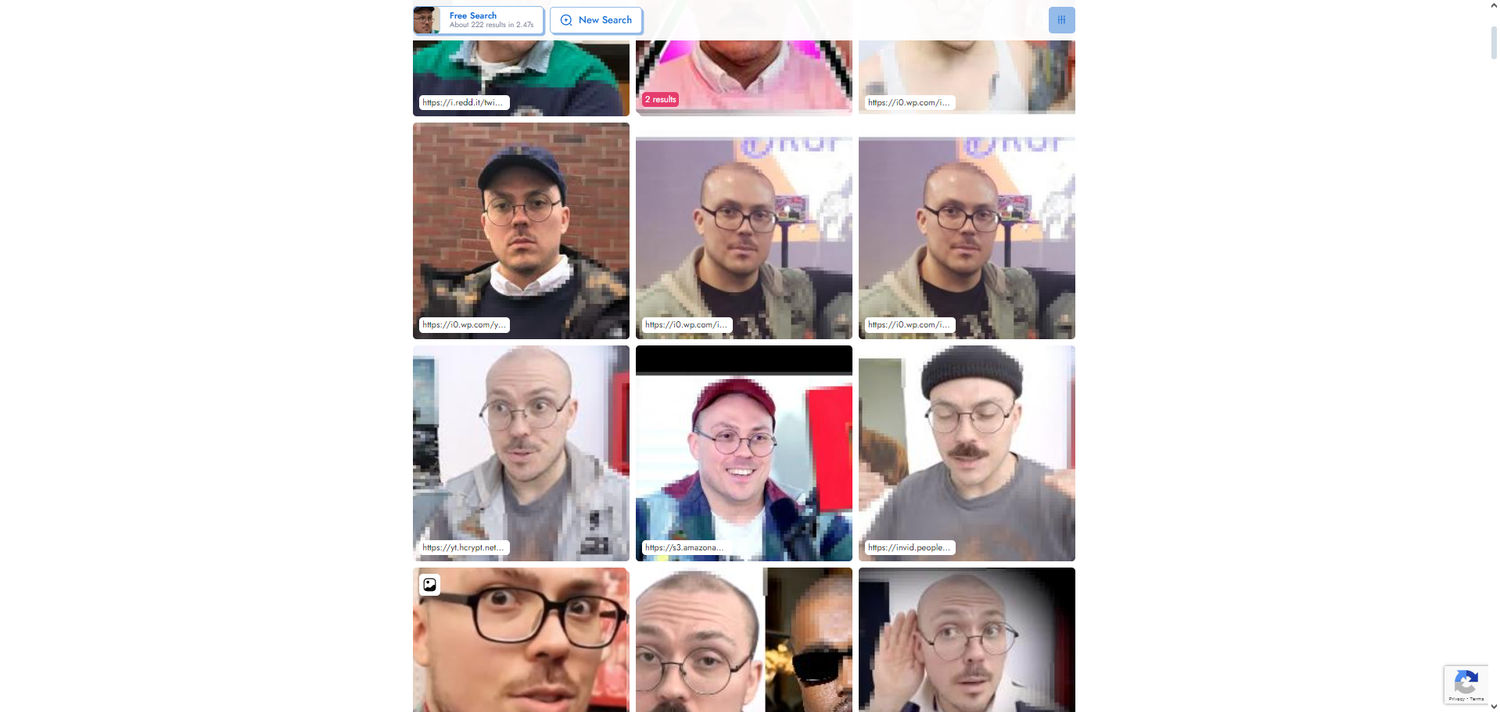
1. Lenso.ai
2. Eyematch.ai
3. Pinterest
4. Google Lens
5. PimEyes.com
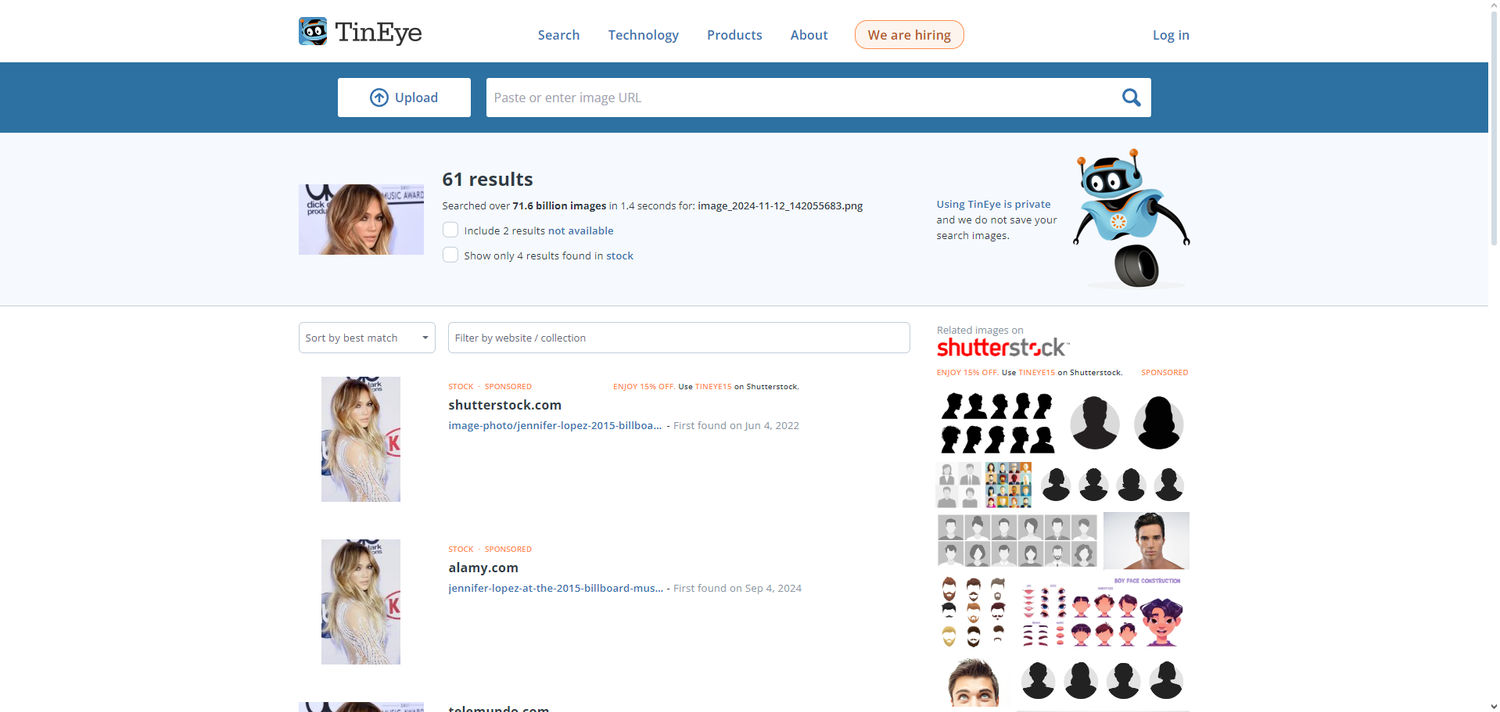
6. TinEye
Summary
This article highlights the top 6 reverse image search websites for face recognition in 2026, with lenso.ai as the #1 choice for its various features and accuracy. Other great options include Eyematch.ai, Pinterest, Google Lens, PimEyes and TinEye, which each offer unique tools to help users find similar faces, identify people, and discover visually related content.
Lenso.ai
Lenso.ai face search is one of the top facial recognition tools available online. With lenso, users can search for people, places, duplicates, and similar images—all in one quick search. Lenso.ai supports 16 languages and offers features like alerts, collections, text search, domain search, and more!

Additionally, Lenso.ai offers an alerts function, allowing users to save alerts for images of their face. This way, users receive email notifications each time Lenso finds their face online.
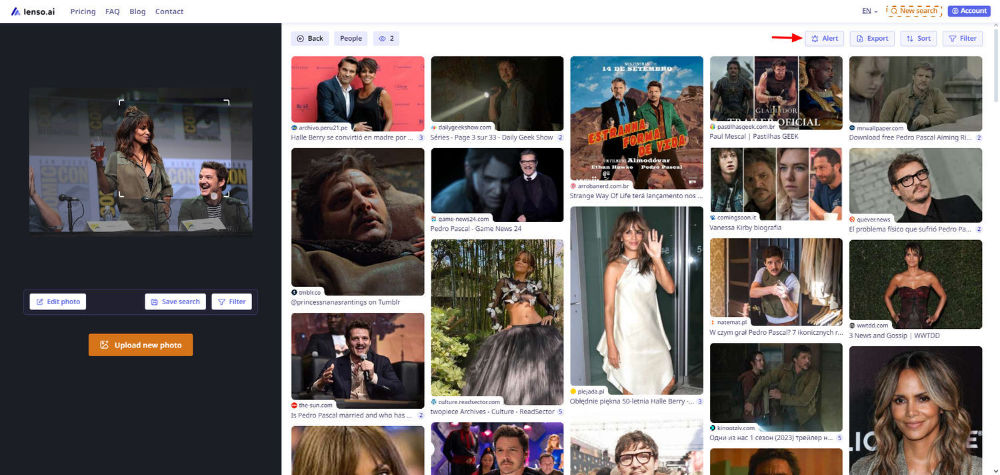
Searching for people is available in select regions.
Eyematch.ai
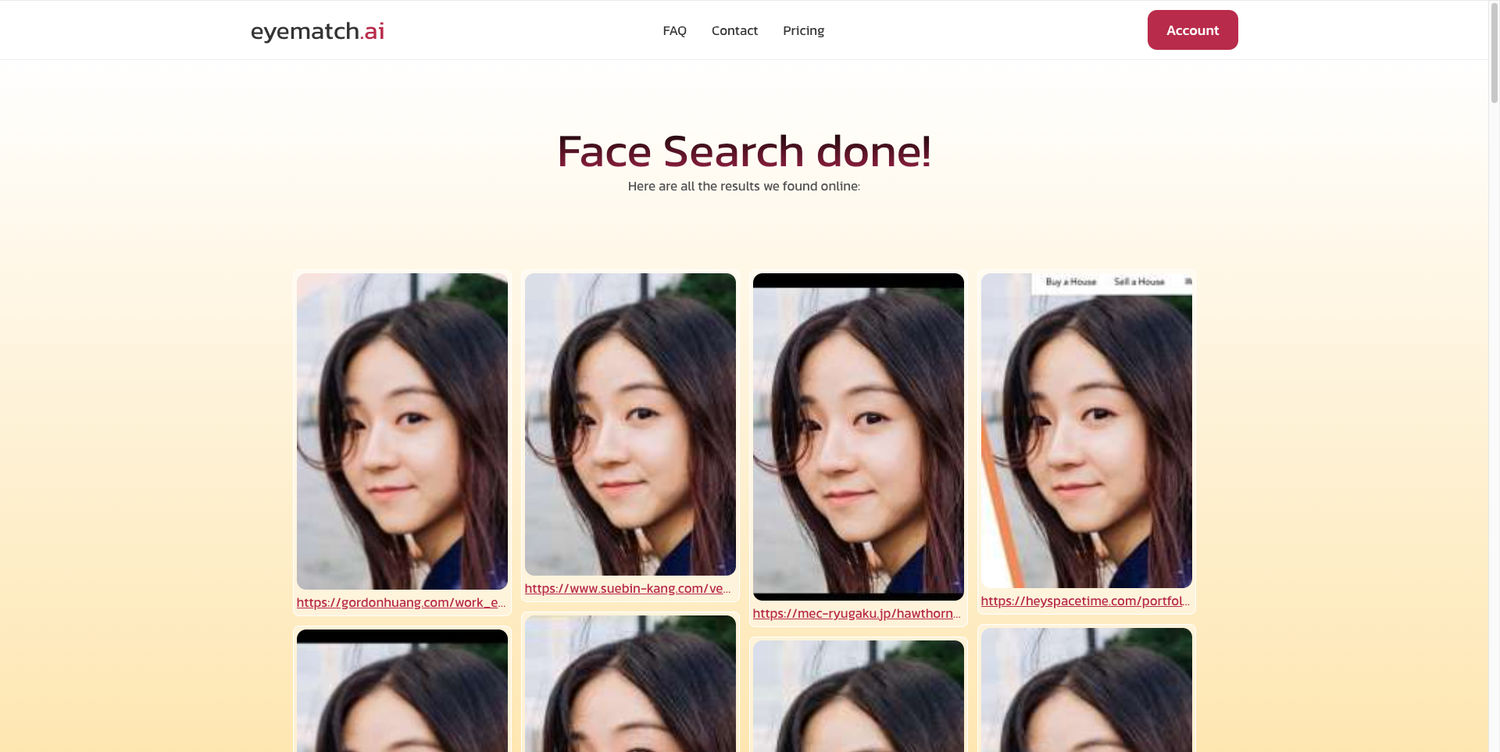
Eyematch.ai is a great facial search engine created for facial search specifically. It does not offer any extra features right now, but it's one of the best new facial search engines with amazing results!
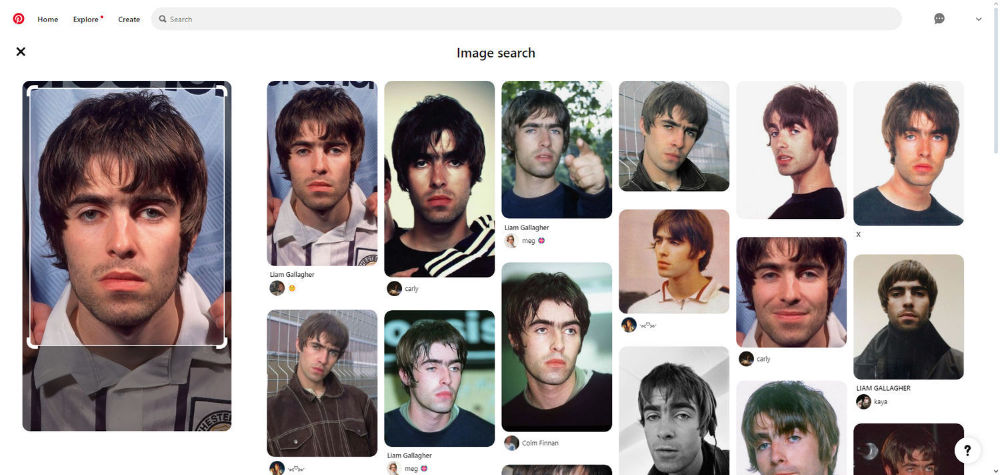
Pinterest is an intuitive tool for finding visually similar content on Pinterest. It allows users to discover related images, people, and styles quickly and effortlessly. This tool is excellent for finding inspiration and locating images that resemble a target photo.
Google Lens
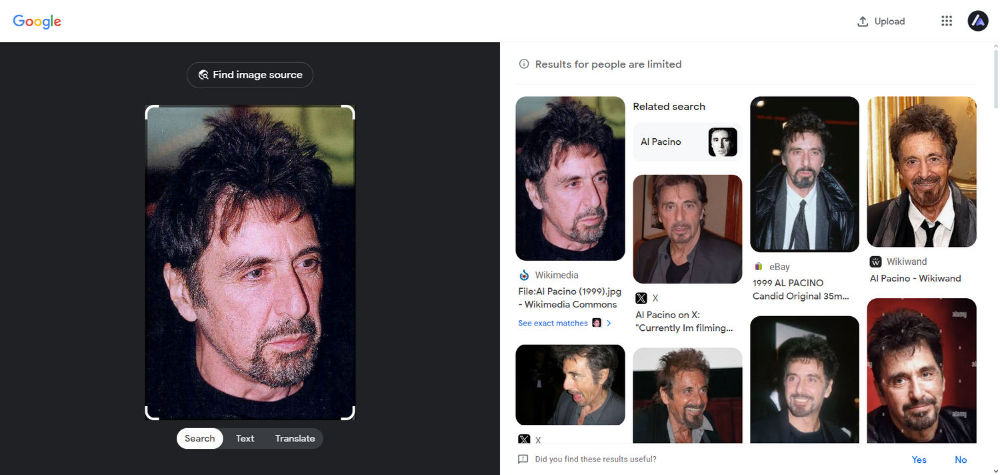
Google Lens is another powerful tool for reverse image searching, offering an easy way to identify celebrities, places, animals and objects by simply taking a picture or uploading an image.
PimEyes.com
PimEyes is an advanced face recognition tool designed specifically to search for faces across the internet. This platform has gained popularity for its precision and ability to find images that match a specific person’s facial features.
TinEye
TinEye is a well-established reverse image search engine that offers unique features for discovering where images appear on the web. While it is not solely focused on facial recognition, TinEye is a tool for finding visually similar images. TinEye lost its popularity due to decline in search quality over the years.
Whether you’re trying to track down a specific photo, confirm an identity, or simply explore visually similar content, these reverse image search tools provide an array of features to help you find exactly what you need. Try them out and see how they can enhance your search experience!

Author
Kinga Jasinska
Marketing Specialist
Continue reading

General
The Best Reverse Image Search for Photographers. Set Up Copyright Notifications!
If you are a photographer looking for a smart way to find your copyrighted content shared online, this is the place for you! In this article, we will explain how you can search for your photos being reposted, and the best ways you can automate the searching.

General
Face Search API by lenso.ai for businesses: Top 5 Industries and use cases
If you run a business and wonder how to boost your user engagement or add a feature that may become a game changer – we do have a solution! You need to implement the face search API from lenso.ai. Check whether your use case may be a good fit for reverse face search integration.

General
How Teams Can Improve Their Image Search Skills with AI-Powered Tools
AI-powered visual tools are changing how photographers, digital marketers, content creators, and researchers work. In a single day, one person might trace the source of a photo, check a campaign image for duplicates, and look for similar visuals for a new project. The tools evolve quickly, and training often struggles to keep up.

General
Lenso.ai vs. Yandex. Reverse Image Search + Face Search Compared
Yandex and Lenso.ai are both reverse image search websites that are used by people wanting to find objects, places or people online. Is there a clear winner between the two? Who does what best? In this article, we will compare Lenso.ai and Yandex and we will try to select the website who performs better depending on your personal requirements.