
Preview in:
What can image search be used for?
Basically, you can find almost anything with image search tools, but they are particularly useful for:
- Face search – checking for catfish scams, potential fraud, or where your images appear online
- Duplicate/copyright search – checking for unauthorized use of your images
- Place detection – finding locations from images
- Original source finding – tracing an image back to its original source
- Investigations – assisting with research and fact-checking
- Similar image search – finding visual inspiration
- Product search – comparing products and finding alternative prices
Here is a list of articles with the mentioned use cases described in detail:
- How can AI find a person from a photo? Try AI-powered tools for reverse face search
- Plagiarism image checker - find duplicate images online!
- Place Search for Free – Top 4 Best Ways to Find a Location from a Photo
- How to find similar images?
- Find clothes by picture using reverse image search engine
How to start your image search with lenso.ai? – a short guide
Here are a few simple steps to perform a reverse image search using lenso.ai:
- Prepare an Image – you can upload a picture from your device, take a new photo, copy an image, or use a screenshot.
- Visit lenso.ai – upload your chosen image to start the search.
- Explore Categories – choose a category based on what you're looking for:
- People
- Duplicates
- Places
- Similar
- Related
- Check the URLs – review the sources where your image appears online.
Research Mode to expand your reverse image search
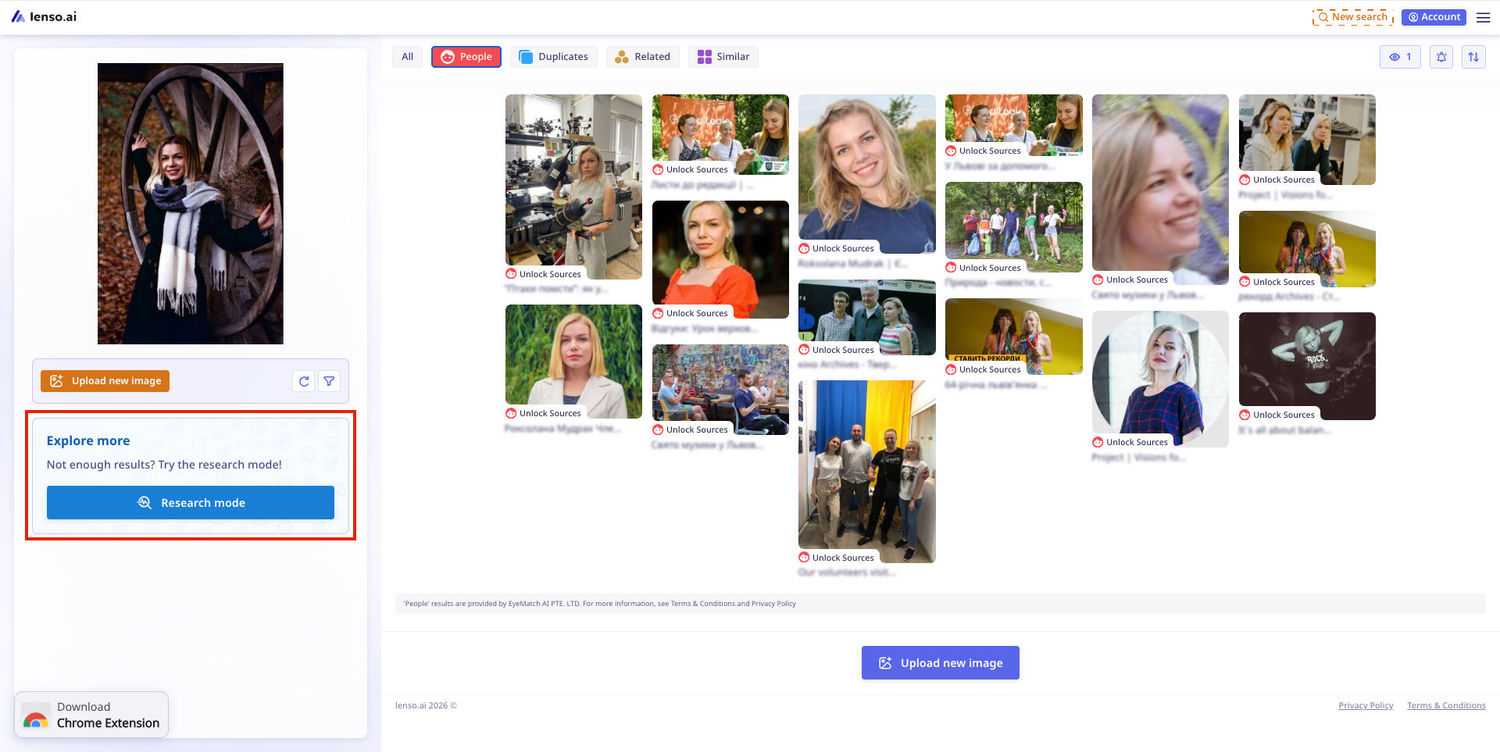
Recently, lenso.ai released a new feature — Research Mode, which enables in-depth searching and allows you to find up to 10,000 image results. Besides that, with Research Mode you will have access to advanced filters:
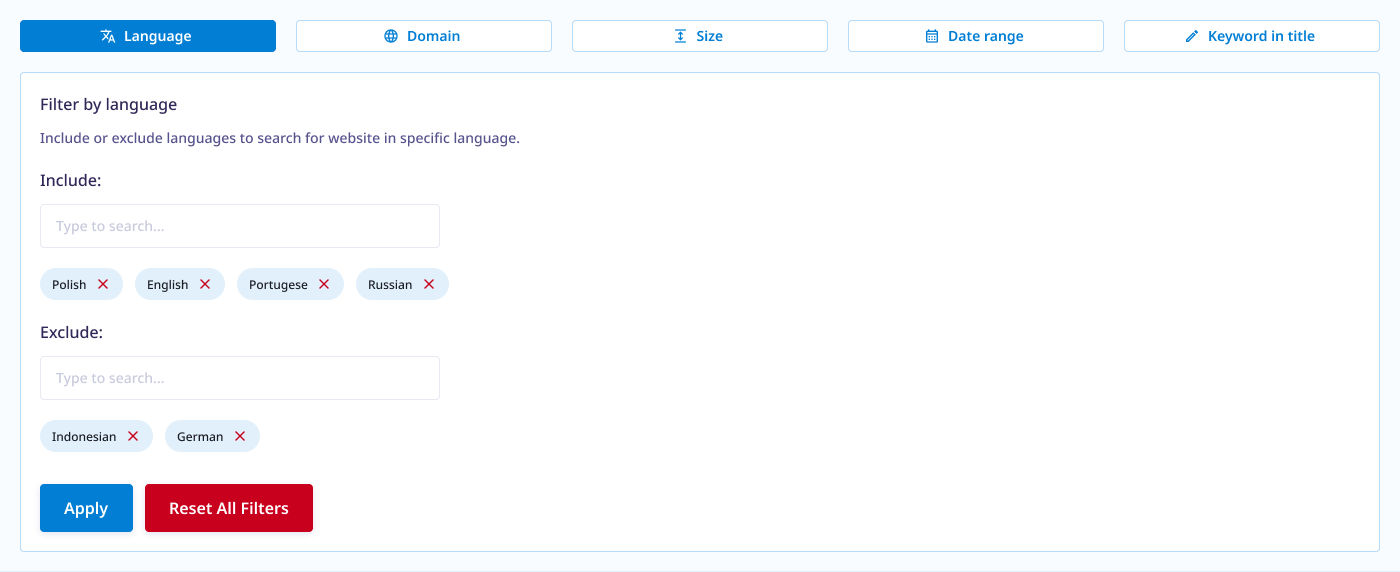
- date range
- domain language (exclude, include)
- exclude or include a specific domain
- image size
- keyword in title
Additional image search options
For a more precise or in-depth search, use:
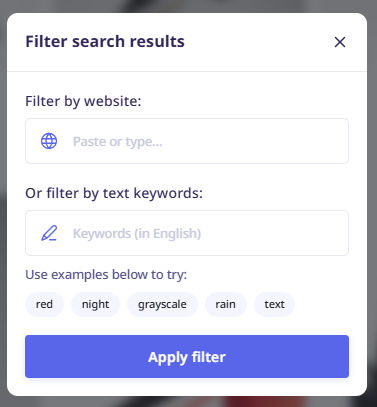
Filters
Search by keyword or domain.
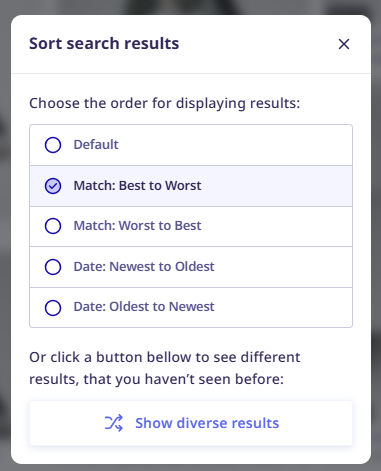
Sorting options
Organize results by newest/oldest, best/worst match, or random.
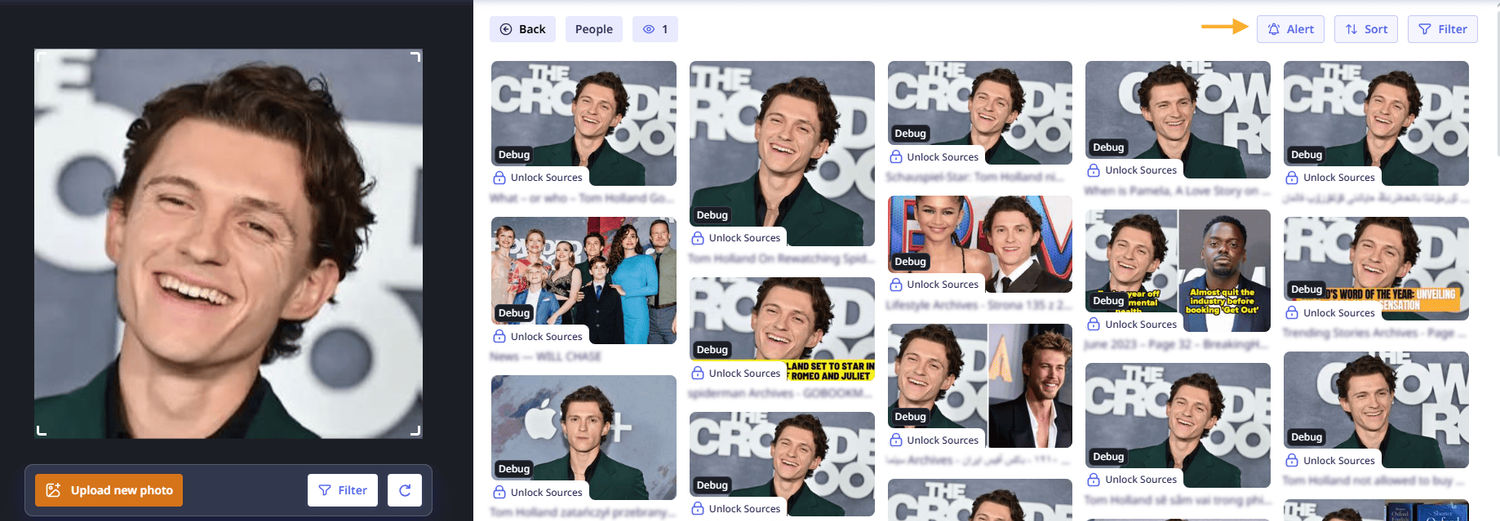
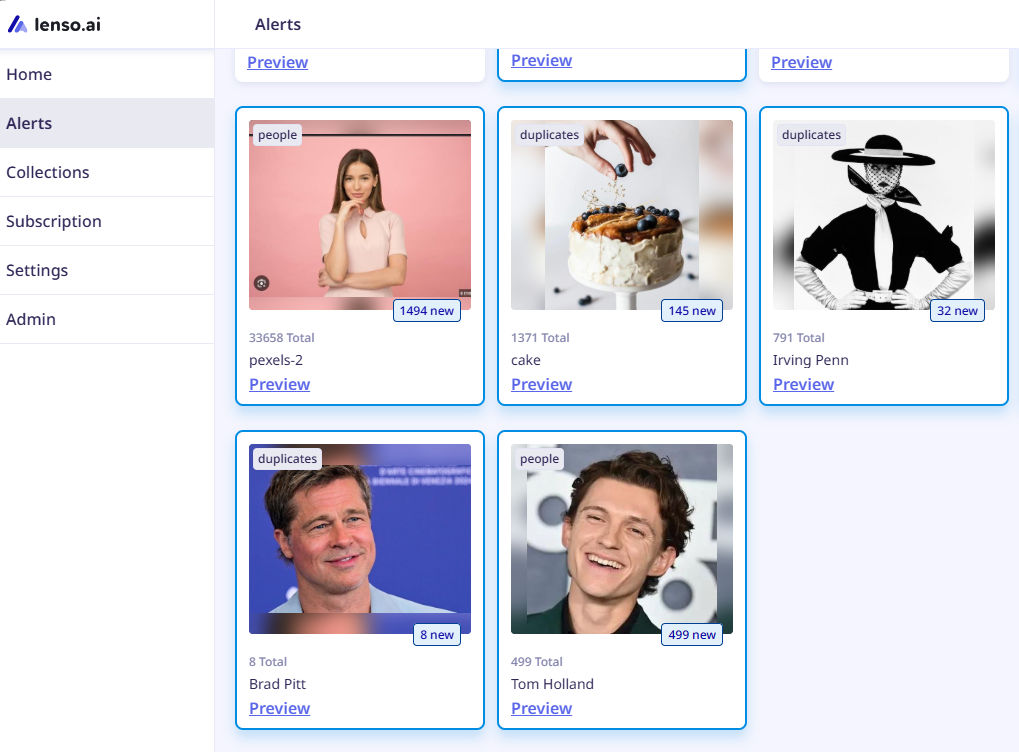
Alerts
Get email notifications when new results for your image appear online.
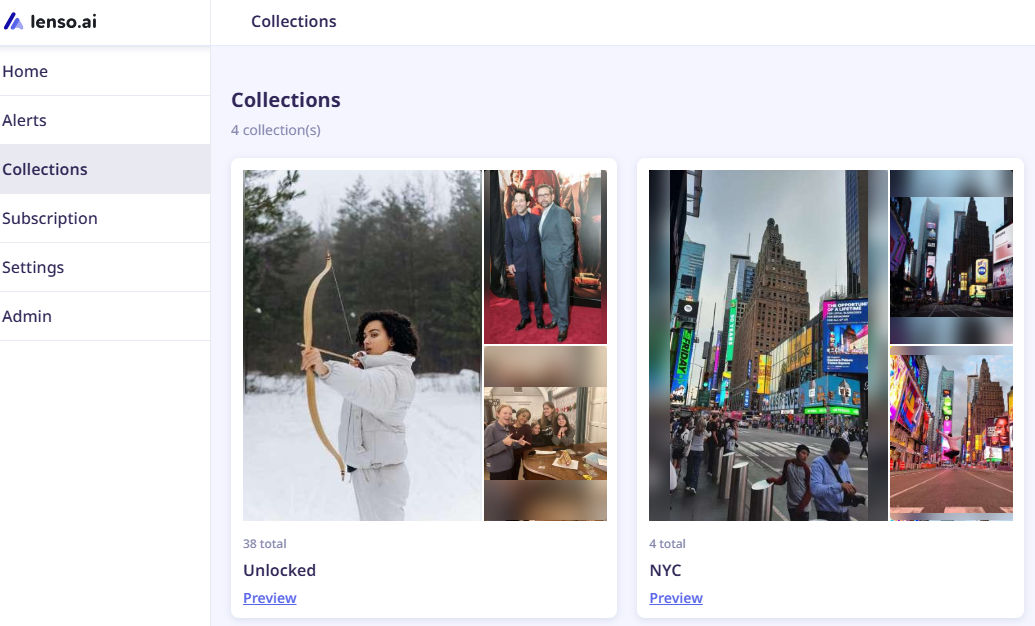
Collections
Save images for future reference or comparison.
How to reverse image search without Google?
How to make your image search more effective?
- Upload high-quality images – clear, sharp images yield better results.
- Use focused images – ensure the person, place, artwork, or product is clearly visible.
- Try multiple images – uploading different angles or variations can bring diverse results.
- Compare sources – check and analyze different URLs, even within the same domain, for accuracy.

Author
Julia Mykhailiuk
Marketing Specialist
Continue reading

General
How Teams Can Improve Their Image Search Skills with AI-Powered Tools
AI-powered visual tools are changing how photographers, digital marketers, content creators, and researchers work. In a single day, one person might trace the source of a photo, check a campaign image for duplicates, and look for similar visuals for a new project. The tools evolve quickly, and training often struggles to keep up.
General
6 Useful Tools for Finding Similar Images and Exploring Visual Matches
An image can communicate an idea in seconds, but sometimes the picture itself raises more questions than it answers.
General
Lenso.ai vs. Yandex. Reverse Image Search + Face Search Compared
Yandex and Lenso.ai are both reverse image search websites that are used by people wanting to find objects, places or people online. Is there a clear winner between the two? Who does what best? In this article, we will compare Lenso.ai and Yandex and we will try to select the website who performs better depending on your personal requirements.
General
AI-Powered Image Tools: From Finding Photos Online to Preparing Them for Official Use
Have you ever looked at a photo and thought where else it might have been used online? Or maybe you need a ready-to-submit passport photo in a short time and have no clue how to get it right? The problem in both cases is that you have to find the right photo and know how to prepare it for official use.

General
Best Online Tools for Image Search and Digital Research
Finding the right information online is not always as simple as typing a few words into a search engine. Sometimes the information you need is contained in an image, while in other situations you may need to work with numbers or technical data to understand what you have found. The right online tools can make these tasks faster and more manageable. For people who regularly work with visual content, research, or digital information, here are some useful tools worth considering.