Preview in:
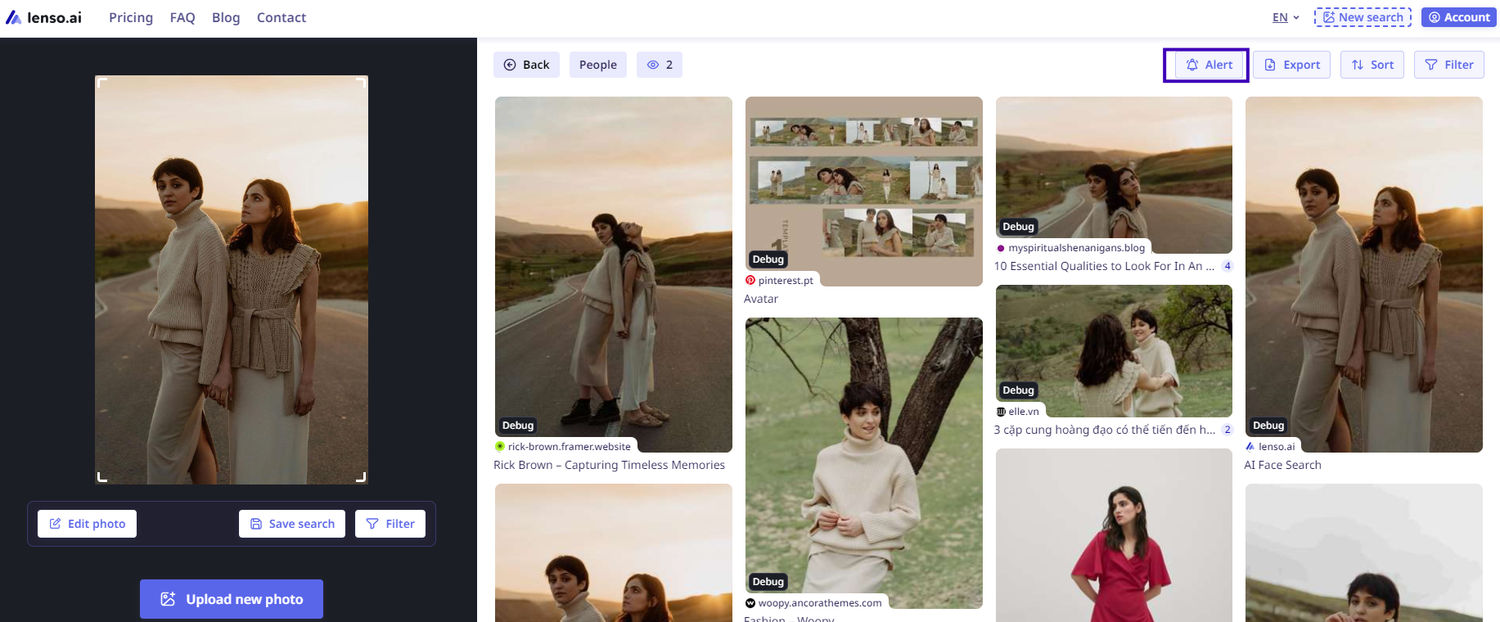
Thanks to reverse image search tools, finding an exact image or uncovering more information about a person in a photo has become easier. Using the face searchoption, you can locate additional photos of the person you're looking for.
How can you find someone with a picture? Try lenso.ai’s face search engine
Whenever you're trying to learn more about someone or check if images of your own face appear online, you should try reverse face search.
Start face search with lenso.ai
Important! For better and more diverse results, use a high-quality picture where the person’s face is clearly visible. Group photos or low-quality images may lead to inaccurate results. If you have multiple pictures of the person, try uploading different ones to see if the results improve.
- Go to lenso.ai
- Upload an image
- Start face search via “People” category
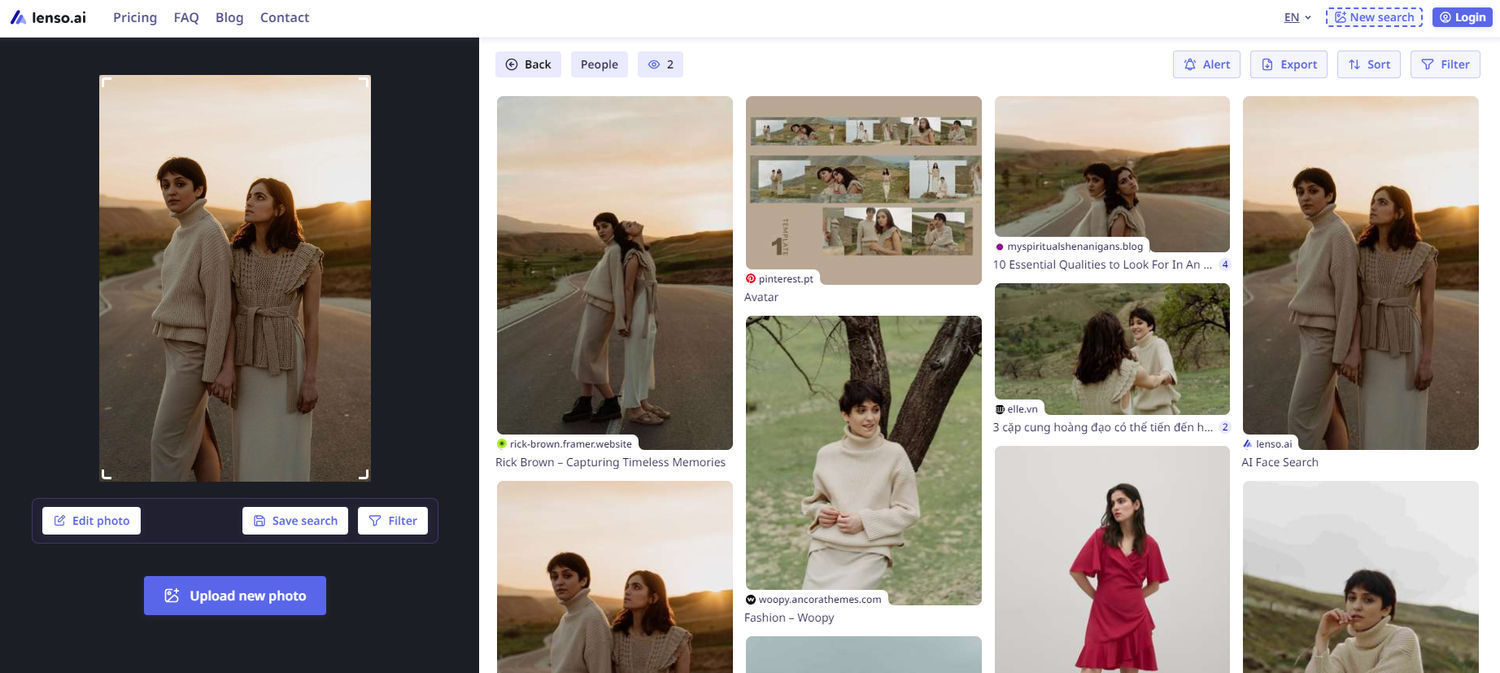
Also, check the results under the "Duplicate" and "Place" categories. The "Duplicate" category shows where the exact image appears online, while the "Place" category can provide information about the location where the person was. This information could be helpful for further search.
Explore additional features on lenso.ai
If you want to go deeper into your investigation, feel free to sort your face results by:
- best/worst match
- newest/oldest
- random
Additionally, you can try using the “Show diverse results” sorting option to help you find alternative matches and broaden your search results.
Use filter options
You can also narrow your search by using available filter options such as:
- Keywords
- Website
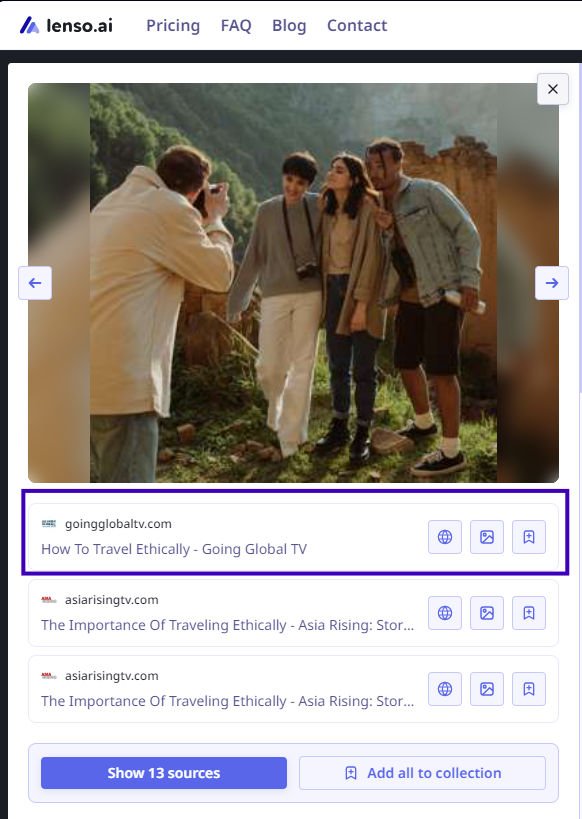
Whenever you find an image that catches your attention, check the URL source of the image. If there are multiple sources, we recommend reviewing each one, as this could lead you to new information or valuable insights.
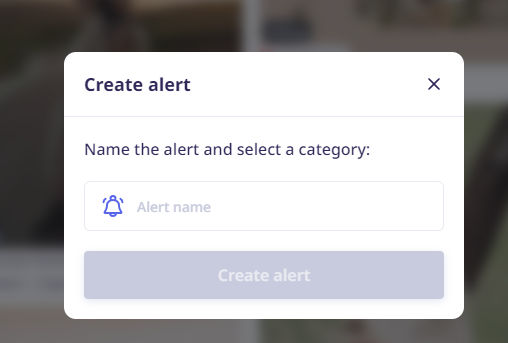
Create Alerts
If you conduct an in-depth search that may take some time, you can create an alert for a specific image on lenso.ai. Whenever a new result appears, you will receive a notification.
What are the next steps to finding someone?
If face search lead you to some new informations, you can move forward with your investigation and search via:
- social media
- public records
- people search tools
- crowdsourcing websites (ex. reddit)
Privacy and ethical considerations
Remember! Using images to find people raises privacy and ethical questions. Before using these tools, make sure:
- You have consent from the individual if possible.
- You’re using the information responsibly and legally, avoiding harassment or unauthorized information sharing.

Author
Julia Mykhailiuk
Marketing Specialist
Continue reading
Guides
How to find the perfect fall photoshoot location from a photo?
Fall is the perfect time for a new photoshoot, whether you want to create fresh content for your personal social media accounts or promote your product or brand with an authentic fall vibe. But first, you need to find the right place. Find out how to discover the perfect fall photoshoot location from a photo.

Guides
What to do in the first ten minutes after you find your own face in a reverse image search?
Finding your own face in a reverse image search is a strange feeling. Not usually because the result is sinister, most of the time it is a conference photo, an old profile picture, a team page from a job you left in 2019, but because you did not put it there and you did not know it was there.
Guides
Is your match real? Reverse image search a dating profile
Dating apps are probably the go-to solution for finding a potential date, but unfortunately, they can also be one of the riskiest options. How can you make sure your match is real? Do a reverse image search and find more information using their dating profile picture.