Preview in:
How AI is Changing Digital Marketing
AI has changed the way marketers do their jobs. It looks at a lot of data, figures out what customers are likely to do, and makes custom content for each user.
Some of the most useful AI tools for marketers include:
- Predictive analytics – Trying to figure out what customers will do before they do it.
- Natural language processing – Making sense of how people talk and giving appropriate responses.
- CRM improvements – Supporting businesses as they keep in touch with their customers.
- Email marketing automation – Sending the right messages at the right time
- Content personalization – Creating unique messages for each user
- Sentiment analysis – Measuring how people feel about your brand
Marketers looking to master these AI applications can find specialized courses on platforms like Coursiv that teach practical implementation of predictive analytics, NLP tools, and automation workflows
How AI Helps with Visual Content
High-quality visuals play a major role in helping brands stand out online. AI also allows marketers to analyze audience reactions to visual content and optimize how they create videosand images for better engagement.
For example, AI tools can:
-
Track where your images appear online
-
Spot when someone is using your content without permission
-
Analyze which visuals get the most attention
This helps marketers protect their content and make smarter choices when creating new visuals with AI models.
Why Privacy Still Matters
The more data companies use for marketing, the more important it is to protect it. People are interested in how their data is used, and so are governments.
Laws like the GDPR (in Europe) and the CCPA (in California) require businesses to follow strict privacy rules. Adherence to these standards provides a foundational defense against the growing financial and reputational risks associated with data breaches 2025.
Protecting people’s data means you stick to the law and also gain your customers’ trust. That trust can lead to customers being loyal for years.
How VPNs Help Marketers Stay Private and Secure
A Virtual Private Network (VPN) is a tool that keeps your internet activity private. For marketers, this means:
-
Protecting private marketing plans and files
-
Safely connecting to servers while working remotely
-
Keeping customer data secure
-
Accessing content and insights from different regions
Pairing a VPN with web hosting with strong uptime ensures both your data and your online presence stay protected and accessible at all times. If you're looking for a VPN, explore the VPN's best deals, which offer strong protection at an affordable price.
If you’re looking for a VPN, explore the VPN's best deals, which offer strong protection at an affordable price.
Using AI and Privacy Together for Better Marketing
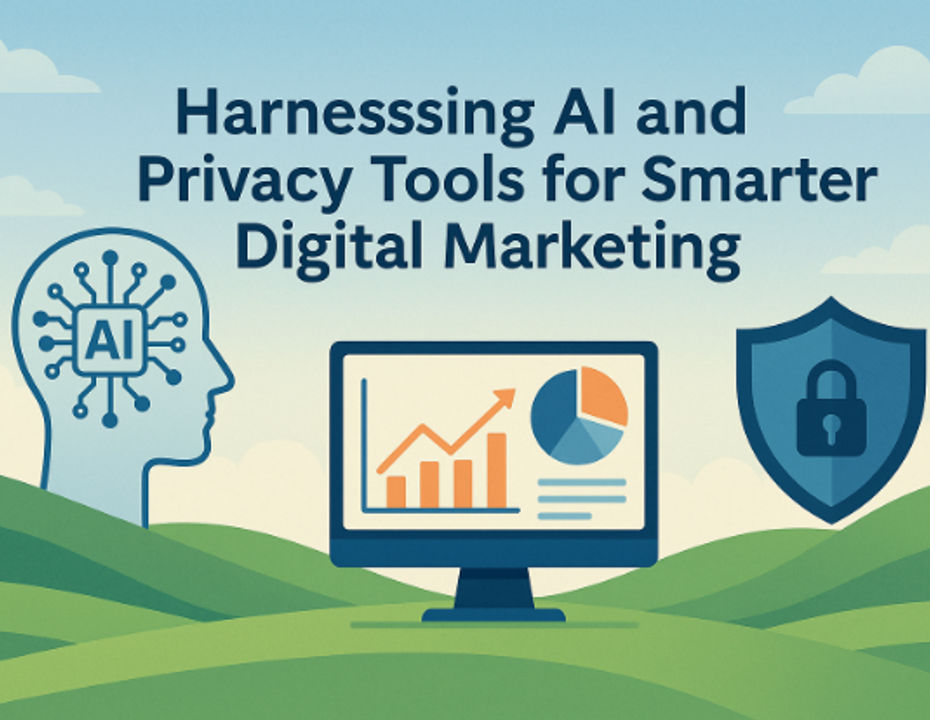
Smart marketers use both AI and privacy tools to run successful campaigns. For example, platforms like Lenso.ai let you improve your visual content strategy with AI, while VPNs keep your data safe. Recent research by Superside shows that while 83% of creative professionals use AI in their workflows, only 14% of businesses feel fully prepared to adopt it responsibly. Many brands are discovering that using AI responsibly is less about “what tool you pick” and more about how you integrate it. Superside’s AI-powered work with enterprises has shown that AI can strengthen creative output if paired with human oversight, helping teams avoid the very pitfalls of over-automation and privacy concerns. To take it a step further, consider adopting an AI-native DSPM solution. It enforces robust data controls and proactive safeguards, helping you protect sensitive information while confidently leveraging AI-driven marketing strategies.
This combination of smart tech and strong privacy helps marketers do their jobs better — and keeps their customers happy.
Final Thoughts
AI gives marketers amazing tools to work faster, smarter, and more creatively. But protecting privacy is just as important. By using AI responsibly and securing your data with tools like VPNs, your marketing can be both effective and trustworthy.

Author
Julia Mykhailiuk
Marketing Specialist
Continue reading

General
How Teams Can Improve Their Image Search Skills with AI-Powered Tools
AI-powered visual tools are changing how photographers, digital marketers, content creators, and researchers work. In a single day, one person might trace the source of a photo, check a campaign image for duplicates, and look for similar visuals for a new project. The tools evolve quickly, and training often struggles to keep up.

General
6 Useful Tools for Finding Similar Images and Exploring Visual Matches
An image can communicate an idea in seconds, but sometimes the picture itself raises more questions than it answers.
General
Lenso.ai vs. Yandex. Reverse Image Search + Face Search Compared
Yandex and Lenso.ai are both reverse image search websites that are used by people wanting to find objects, places or people online. Is there a clear winner between the two? Who does what best? In this article, we will compare Lenso.ai and Yandex and we will try to select the website who performs better depending on your personal requirements.

General
AI-Powered Image Tools: From Finding Photos Online to Preparing Them for Official Use
Have you ever looked at a photo and thought where else it might have been used online? Or maybe you need a ready-to-submit passport photo in a short time and have no clue how to get it right? The problem in both cases is that you have to find the right photo and know how to prepare it for official use.

General
Best Online Tools for Image Search and Digital Research
Finding the right information online is not always as simple as typing a few words into a search engine. Sometimes the information you need is contained in an image, while in other situations you may need to work with numbers or technical data to understand what you have found. The right online tools can make these tasks faster and more manageable. For people who regularly work with visual content, research, or digital information, here are some useful tools worth considering.