
Preview in:
In just the past year, generative AI has fully permeated every area of business and everyday life.
But in reality, its impact is far more global than most people think. Without question, the biggest “breakthrough” happened thanks to the explosion of generative assistants that became accessible to billions of users.
However, while you might be using them for everyday tasks, AI has already offered hope for developing cancer treatments, visual search, helping create Digital Twins of power and extraction facilities for safe simulation of critical scenarios, and has massively accelerated the advancement of self-driving cars, making their systems safer.
In the past hundred years, there hasn’t been a greater breakthrough driven by a single technology. In terms of impact, it compares to the Industrial Revolution, the discovery of penicillin, and Henry Ford’s invention of assembly-line manufacturing.
So believe me: life is now divided into “before 2025” and “after 2025.” In this article, we’ll explore the most impressive and fundamental industry achievements made possible by AI.
Visual Search

Image-based search is the newest technology gaining momentum. Platforms like lenso.ai use deep learning to analyze visual features of photos. You upload a picture, and the system finds similar images, people, places, or duplicates on the web.
Photographers use this technology to protect copyrights, designers to find inspiration, and regular users to find where to buy things they like in photos, or to find faces online.
The future of visual search includes integration with augmented reality and applications in medicine for diagnostics. Fashion retailers are already testing "snap and shop" features that identify clothing items in street photography. The line between getting inspired by someone's outfit and immediately buying it is getting pretty blurry.
Healthcare

Healthcare is changing faster than almost any other industry. Take Yorkshire, for example, where doctors are experimenting with a system that can predict which patients need urgent hospitalization — and it gets it right about 80% of the time. The algorithm looks at things like blood oxygen, pulse, mobility, and chest pain, and then draws conclusions on its own, without bias.
Singapore General Hospital implemented a solution to combat antibiotic resistance. The system processes patient symptoms and helps distinguish viral infections from bacterial ones, ensuring antibiotics are prescribed only when truly necessary. According to developers, this approach can significantly reduce unjustified antibiotic use, which is a global problem.
Pharmaceuticals
Some of the biggest breakthroughs are happening in structural biology, where AI can now predict a protein’s 3D shape from its amino-acid sequence. Systems like AlphaFold and RoseTTAFold do it almost instantly, slashing what used to take years or decades down to weeks or months. This isn’t just a speed improvement — it’s opening the door to entirely new ways to tackle cancer, viral infections, autoimmune diseases, and rare conditions.
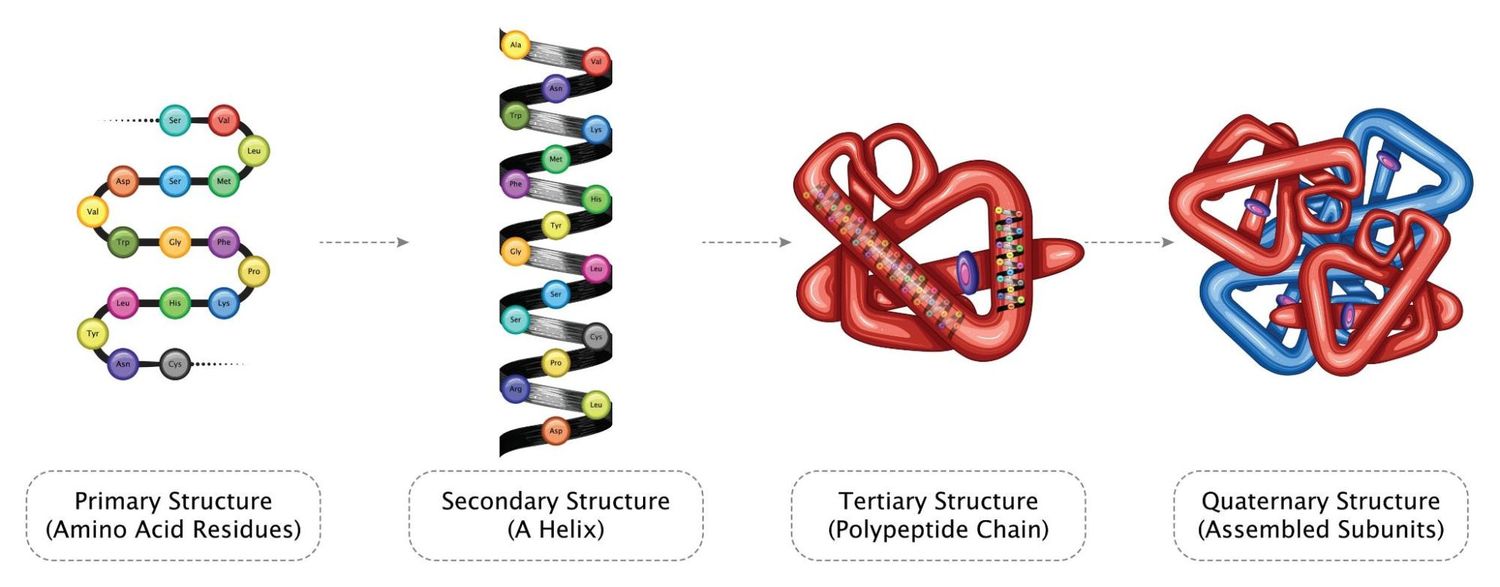
This shift opens new doors in treating cancer, viral infections, autoimmune diseases, and rare disorders, as scientists can design new molecules with far greater accuracy and speed.
New drug development traditionally took decades and cost billions of dollars. Insilico Medicine changed this rule. Their drug ISM001-055 for treating idiopathic pulmonary fibrosis became the fastest AI-discovered medicine to reach Phase IIa clinical trials.
What makes this case special? Artificial intelligence didn't just speed up the search among existing molecules but helped identify a completely new molecular target that had previously been overlooked by scientists. Phase IIa showed preliminary efficacy and safety of the drug, giving hope to millions of people with this deadly disease. The trial enrolled patients from different continents, which matters because genetic backgrounds and environmental factors vary quite a bit. So far, the AI-generated hypothesis seems to hold up across those differences.
Other companies are also demonstrating success:
- Recursion announced positive Phase II results for drug REC-994, designed to treat cerebral cavernous malformation
- Lantern Pharma reports on the efficacy of LP-300 in treating non-small cell lung cancer in non-smokers
- Exscientia created an AI-designed cancer drug that entered clinical trials in less than a year
According to expert forecasts, by 2025, 30% of new drugs will be discovered using AI. The technology can reduce development costs by up to 40% and cut the time from idea to preclinical candidate from five years to 12-18 months. Smaller biotech companies, which historically couldn't compete with massive pharmaceutical corporations, suddenly have access to tools that narrow the resource gap. It's not a completely level playing field yet, but it's closer than it's ever been.
Diagnostics
The UK's National Institute for Health and Care Excellence approved the use of AI for analyzing X-ray images. It turns out that emergency doctors miss fractures in nearly 10% of cases. Artificial intelligence helps detect these errors and reduce the number of follow-up visits. When radiologists went back through images with AI assistance, they caught about 94% of fractures that had been initially missed. That's a pretty clear indication that machine learning works better as a safety net than as a replacement for human judgment.
The digital platform Huma showed impressive results: a 30% reduction in readmissions and a 40% decrease in patient review time. Doctors get more time for direct patient work rather than paperwork. Patients using Huma also gave higher satisfaction scores, especially around feeling like their care teams were actually paying attention between appointments instead of just seeing them for ten minutes every few months.
Major technology companies are also actively working in this direction. DXC (https://dxc.com/industries/healthcare-solutions) offers comprehensive solutions for medical facilities that combine analytics, cloud technologies, and AI. Their specialists help hospitals share data more effectively, automate routine processes, and improve diagnostic quality.
Particularly interesting are cases of developing AI systems for auditing antibiotic use and personalizing prescriptions. Instead of manually updating electronic health records software, hospitals can use existing data in new ways. This approach saves medical staff time and improves treatment outcomes.
Mediwhale created a platform that analyzes retinal images to detect heart, kidney, and eye diseases. The system already operates in hospitals in Dubai, Italy, and Malaysia, replacing invasive diagnostic procedures with simple eye scans. This enables early detection of asymptomatic conditions.
Energy & Infrastructure
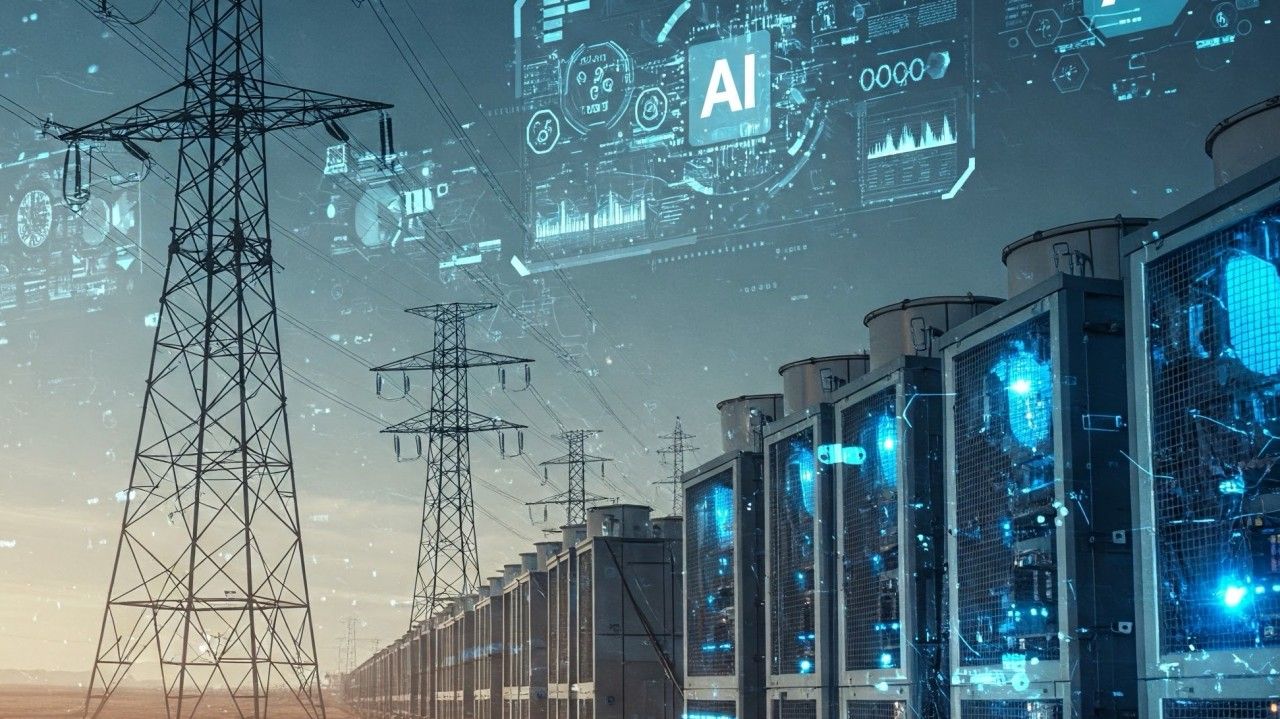
AI is quietly changing the way we manage energy. One of the most practical developments right now is something called digital twins. Imagine a virtual version of a power plant, pipeline, or grid that updates itself constantly as new information comes in. Engineers can use these digital twins to see what might happen if a storm hits, a piece of equipment fails, or demand suddenly spikes — all without risking the real system.
The benefits go beyond just safety. Utilities can spot where energy is being wasted and figure out which machines need attention before they break down. That means fewer unexpected outages, lower costs, and a smoother-running network overall. It’s the kind of tool that helps energy companies stay ahead of problems instead of reacting after the fact — and in an industry where downtime can be extremely costly, that’s a big deal.
Autonomous Vehicles

Self-driving technology has quietly moved past just “seeing” objects to actually trying to predict what those objects will do next. Modern systems don’t just identify a pedestrian — they try to guess if someone is about to step off the curb or if a cyclist might swerve. Because these systems rely on complex software to process data and make decisions in real time, maintaining reliable code is essential. An AI code review can help development teams identify potential issues and improve code quality before software is deployed in safety-critical systems.
That kind of prediction makes autonomous cars feel less robotic and more confident in the chaos of city traffic. Robotaxi companies use this approach to navigate tricky intersections and unpredictable behavior safely. And it’s not limited to cars — trucks and delivery drones are starting to adopt similar systems, where consistent timing and reliability matter even more than comfort.
Highway freight, in particular, looks very promising in the near term. Long-haul routes are predictable enough that autonomous trucks can handle them with minimal human supervision. Considering that driver fatigue causes a large portion of accidents, plus the potential for cutting logistics costs, it’s a big win. Pilot programs in the southwestern United States have already logged millions of miles, showing encouraging safety records. The main hurdle now is regulation — rules differ widely from state to state, slowing down wider deployment.
Conclusions: An Irreversible Shift and What Comes Next
Artificial intelligence is no longer just polishing individual workflows — it is reshaping entire industries. We’re watching healthcare become more accurate, drug development move faster and become more accessible, and everyday experiences grow far more personalized. But the future will depend on a delicate balance: we need to automate the repetitive parts of work so people can focus on what machines still can’t replace — empathy, creativity, strategic thinking, and deep contextual understanding. That will be the next major challenge: preserving our humanity, valuing craftsmanship, protecting the hard-earned experience of medical professionals, and keeping space for unconventional ideas that only a person can generate.
What comes next will likely feel even more like science fiction: multi-agent systems able to digest huge volumes of complex information and act on it; biological foundation models that finally reveal how the human body works at every level; agentic AI that learns from its own actions the way living organisms do. We’re only at the beginning of this transition, and the path ahead is long — we just have to make sure it doesn’t turn into a Terminator.

Author
Guest Post
Content Writer
Continue reading

General
6 Useful Tools for Finding Similar Images and Exploring Visual Matches
An image can communicate an idea in seconds, but sometimes the picture itself raises more questions than it answers.
General
Lenso.ai vs. Yandex. Reverse Image Search + Face Search Compared
Yandex and Lenso.ai are both reverse image search websites that are used by people wanting to find objects, places or people online. Is there a clear winner between the two? Who does what best? In this article, we will compare Lenso.ai and Yandex and we will try to select the website who performs better depending on your personal requirements.

General
AI-Powered Image Tools: From Finding Photos Online to Preparing Them for Official Use
Have you ever looked at a photo and thought where else it might have been used online? Or maybe you need a ready-to-submit passport photo in a short time and have no clue how to get it right? The problem in both cases is that you have to find the right photo and know how to prepare it for official use.

General
Best Online Tools for Image Search and Digital Research
Finding the right information online is not always as simple as typing a few words into a search engine. Sometimes the information you need is contained in an image, while in other situations you may need to work with numbers or technical data to understand what you have found. The right online tools can make these tasks faster and more manageable. For people who regularly work with visual content, research, or digital information, here are some useful tools worth considering.