Preview in:
Reverse image search has become an essential tool across various industries, personal use, and even an occasional graphic design side hustle. Recently, a growing number of reverse image search tools have emerged on the global market.
Lenso.ai stands out as a prime example of an AI-powered reverse image search tool, enabling users to conduct in-depth searches with its advanced filter and sort options.
How to effectively use text keywords on lenso.ai? - key advice
Before starting an image search, remember to add a high-quality photo. Check out the best app to enhance photo quality and choose a solution that fits your needs.
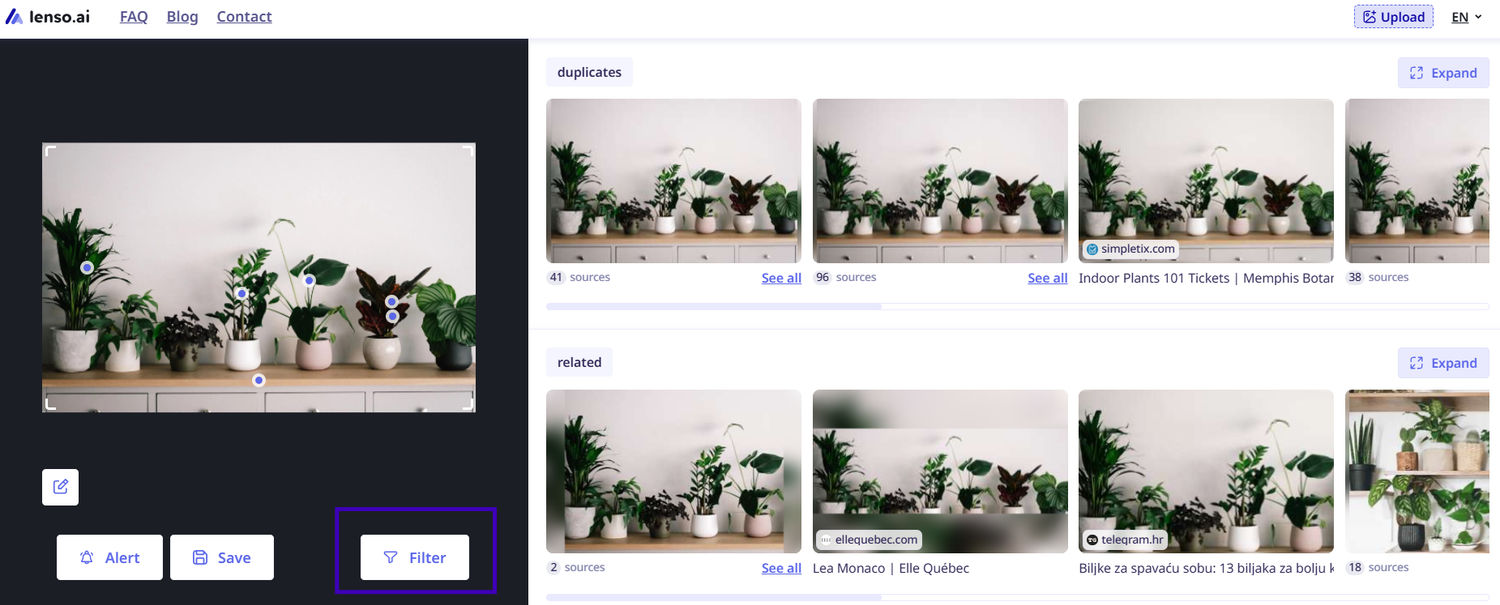
As soon as you upload an image on lenso.ai and start searching by image, you will see a filter button which enables you to specify the results by using text keywords.
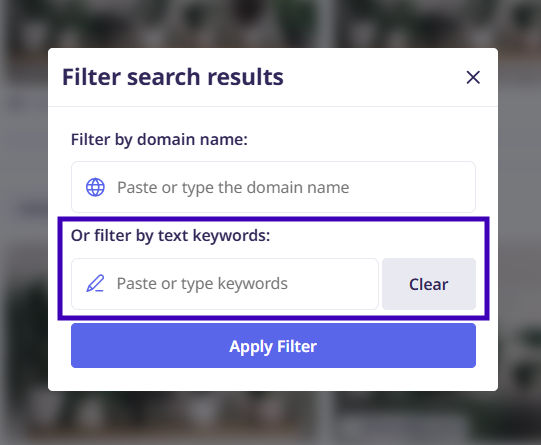
Before enter keywords, follow our guidelines that will enrich your image search results even more:
- Be specific - When using text keywords, be as specific as possible. Instead of using a general term like "plants," use "palm". Specific prompts help the AI narrow down the search results more accurately.
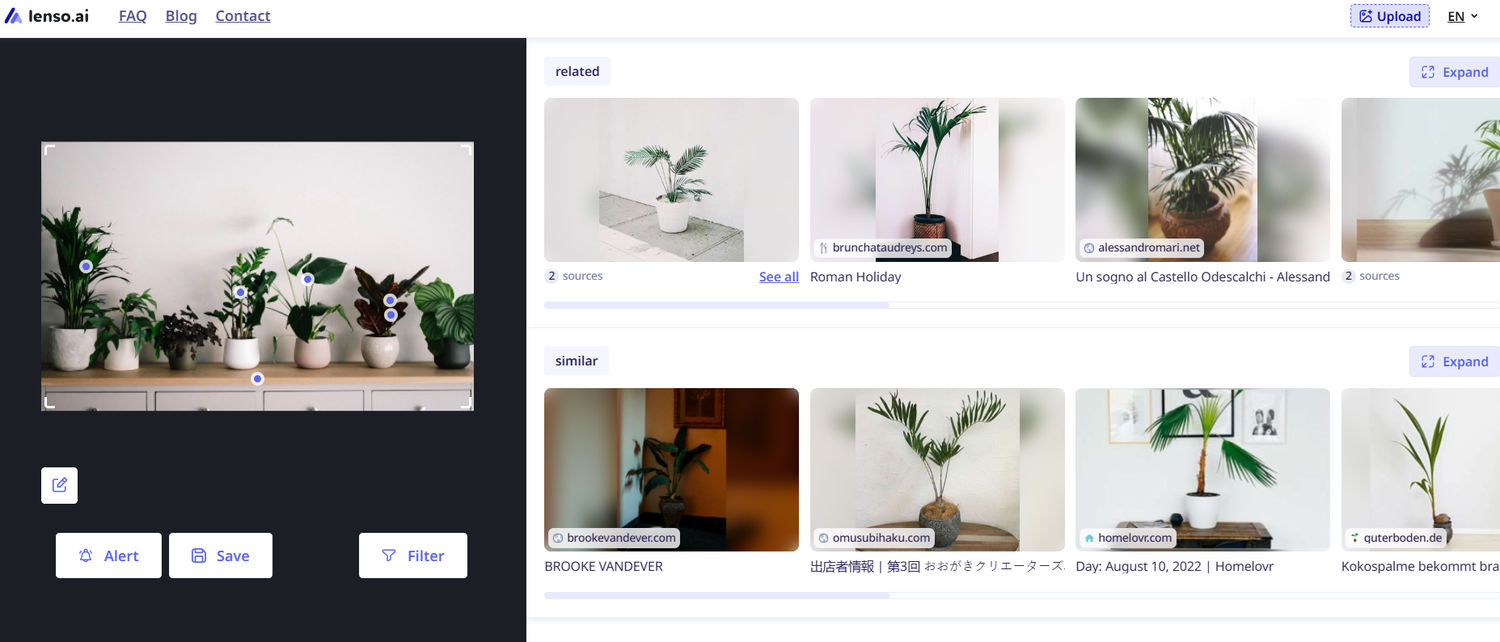
- Relate Keywords to the Image: If you start with an image of beaches, but are looking for an image of beach sunset include words like "sunset" or "golden hour."
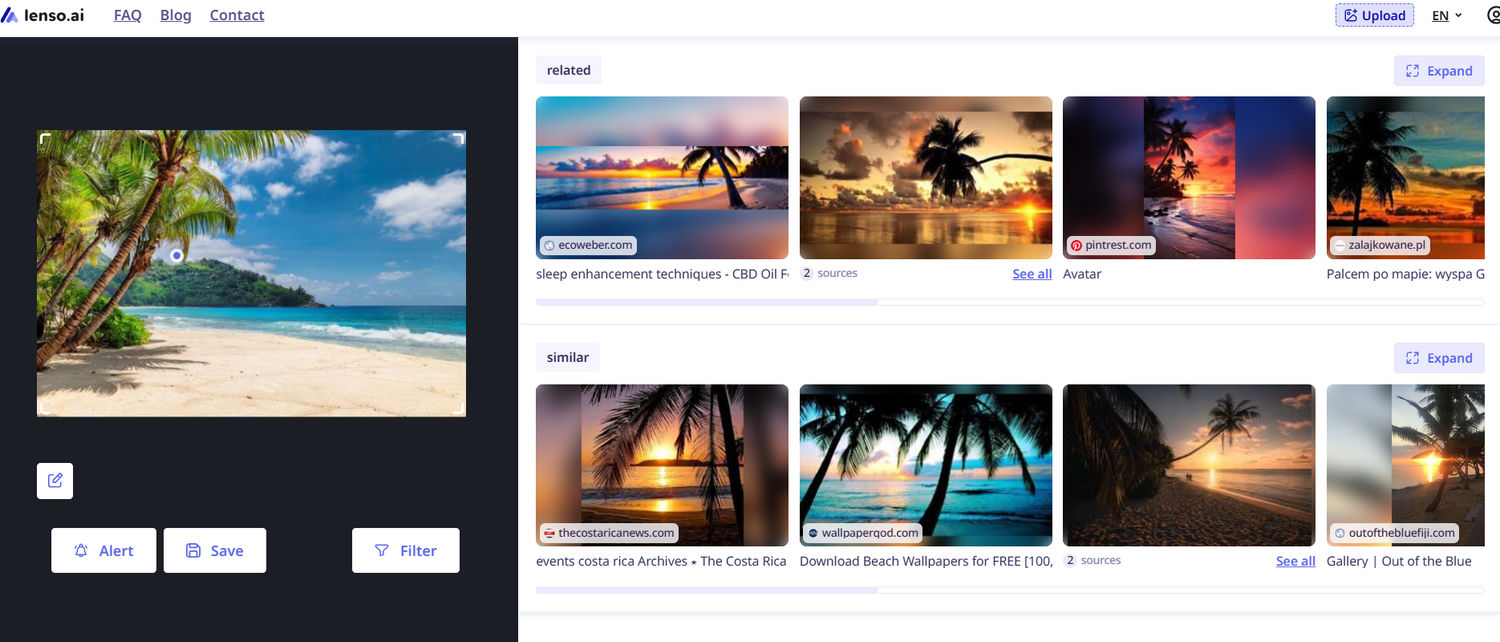
- Experiment with Synonyms: If you're not getting the desired results, try using synonyms or related terms. For example, if "car" doesn't yield good results, try "automobile" or "vehicle."
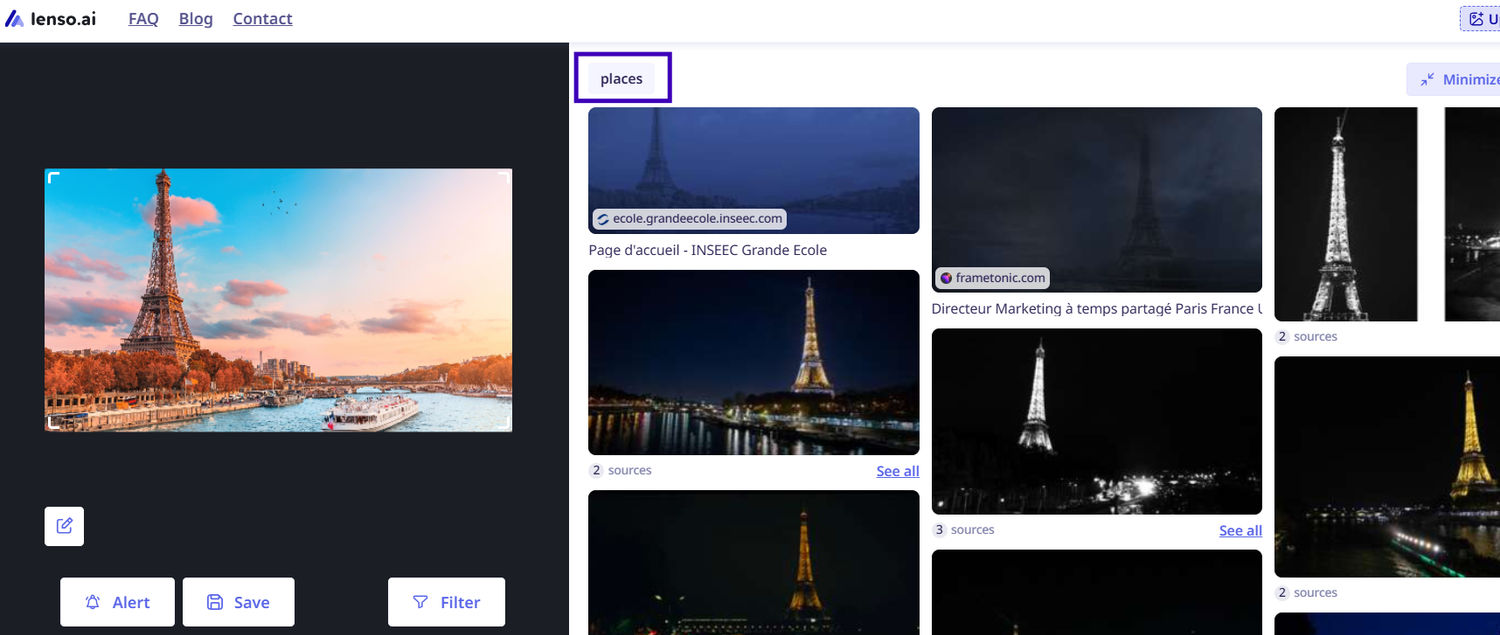
- Leverage Categories: Use text keywords in conjunction with lenso.ai’s categories. For example, if you're searching for similar landscapes, use keywords for specify the search like "Eiffel tower at night" and select the "Places" category.
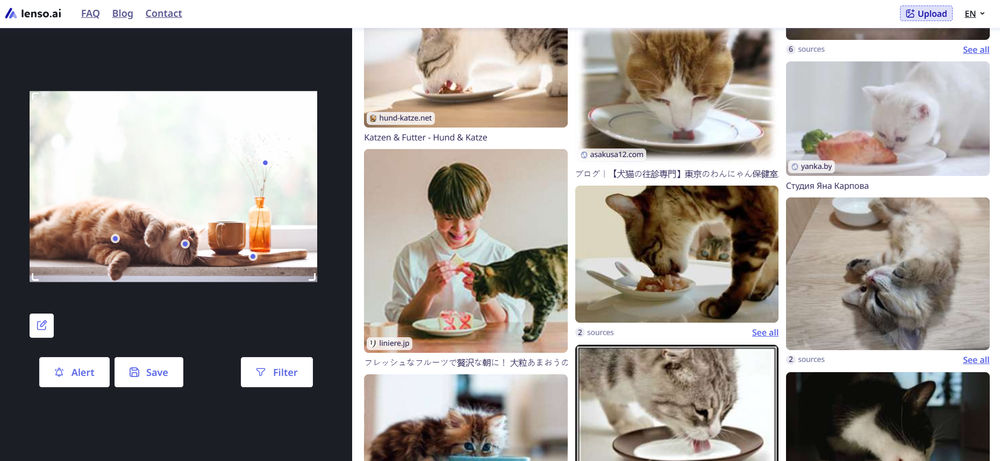
- Contextual Prompts: Provide context to your keywords to get more accurate results. If you start with a cat image and look for eating cat image, provide keywords such as “cat eating” or “cat with food”.
- Check for Spelling and Grammar: Ensure your keywords are free from spelling and grammatical errors, as this can affect the search results.
Learn more about effective advice to bring your AI image search up to a new level
How to boost your reverse image search? - alternative options
Apart from text prompts,lenso.aioffers additional options to enhance your reverse image search experience:
Categories
- Places - search for similar landscapes, buildings, and locations
- Duplicates - search for duplicates of the image including edited, cropped, or filtered versions
- People- search for similar faces or track your digital footprint
- Related search - search for images that are related to the uploaded image, but not necessarily visually similar
- Similar search - find images with a similar layout or content
*Available in selected regions
Additional Options:
- Domain-Specific Search - Narrow your search by providing a specific domain URL
Sort Options:
- Newest/Oldest- sort pictures based on date of indexing
- Best/Worst match - sort based on how well the image matches the pictures in the index
- Random - sort randomly for more diverse results
- Shuffle - shuffle to make the images show up in a random arrangement

Author
Julia Mykhailiuk
Marketing Specialist
Continue reading
Guides
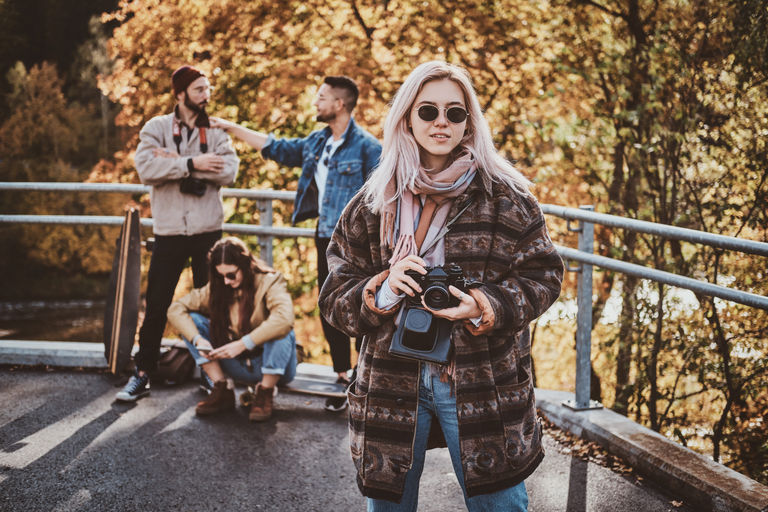
How to find the perfect fall photoshoot location from a photo?
Fall is the perfect time for a new photoshoot, whether you want to create fresh content for your personal social media accounts or promote your product or brand with an authentic fall vibe. But first, you need to find the right place. Find out how to discover the perfect fall photoshoot location from a photo.

Guides
What to do in the first ten minutes after you find your own face in a reverse image search?
Finding your own face in a reverse image search is a strange feeling. Not usually because the result is sinister, most of the time it is a conference photo, an old profile picture, a team page from a job you left in 2019, but because you did not put it there and you did not know it was there.

Guides
Is your match real? Reverse image search a dating profile
Dating apps are probably the go-to solution for finding a potential date, but unfortunately, they can also be one of the riskiest options. How can you make sure your match is real? Do a reverse image search and find more information using their dating profile picture.