
Preview in:
Browsing physical products in brick-and-mortar stores lets shoppers touch, feel, and even try items, giving them direct feedback about quality, suitability, and effectiveness. Online shopping, however, does not allow interaction. So, to make buying decisions, consumers have to rely on brand-driven product education.
Still, product descriptions aren’t always enough to ensure comprehension or build customer confidence.
That’s where visual product education comes into play. As a format that bridges gaps that copy can’t, imagery communicates key product benefits, supports the evaluation process, and even drives purchase intent through aspirational value. Moreover, research shows that 75% of consumers rely on product photography when making online purchase decisions, proving the importance of these assets in your digital sales strategy.
Add AI-powered visual search to the equation, and you can see how visuals transform product discovery and research pathways, shortening the time buyers need to move from awareness to conversion.
So, what’s the best tactic for ecommerce brands to use images to build customer confidence? The following six tactics are the most effective ways to approach visual product education. Let’s dig in.
Show Products from Multiple Angles to Communicate Important Details
Product imagery is crucial in helping consumers make shopping decisions. But how do you use visuals to help web visitors recognize the value of your solutions?
The first step for using visual product education to build purchase intent is giving prospects enough images to evaluate your offer with confidence. Still, you may wonder: what is enough?
There’s no precise answer. Research shows that, on product listing pages, three thumbnails are the minimum to give users enough information for evaluation. As for product pages, more is better. For example, Amazon suggests that sellers provide at least six product images (in addition to the main visual) and one video to help customers evaluate products effectively.
The key to doing this right isn’t simply to prioritize the number of product photos you use to communicate important details. Instead, show your solutions from as many angles as possible, while highlighting important features, details, and scale. That way, you can address customer uncertainties and give them the answers they need before asking them to commit to conversion.
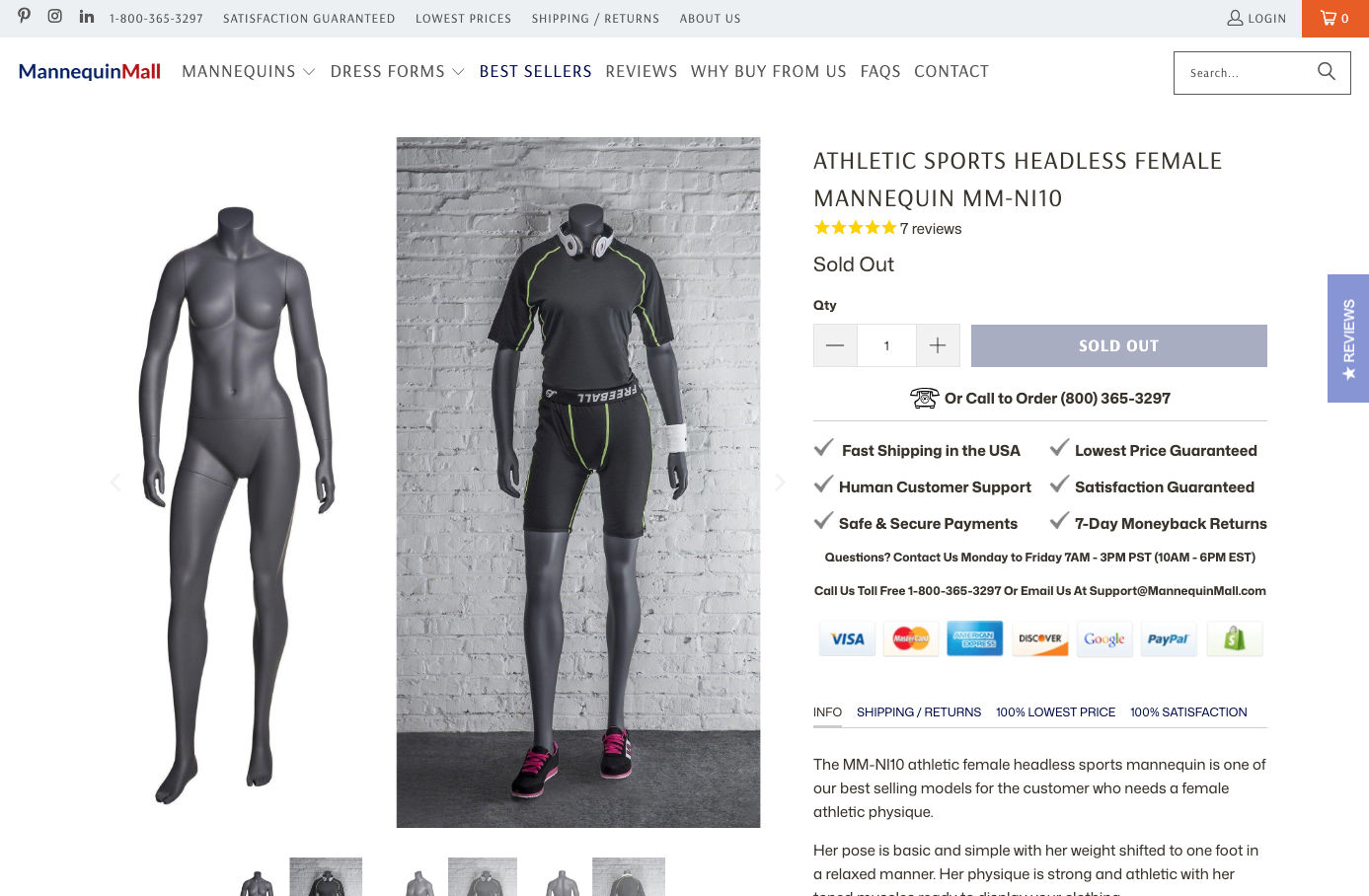
Mannequin Mall is an excellent example of a brand that uses multiple product images to show its solution from all angles. By showing its athletic sports mannequin from the front, at a 45-degree angle, and from the back, this business ensures shoppers know exactly what the product looks like and how clothes will hang in real life. Admittedly, these three images are fewer than the 8 product visuals per product that are standard in the fashion industry. Nonetheless, they’re enough for Mannequin Mall’s audience to evaluate the product and decide whether it matches their needs.
Source: mannequinmall.com
Use Clear Imagery to Help Shoppers Distinguish Similar Products
During the typical buyer’s journey, consumers make their final buying decisions on product pages. However, these are not the sections of your ecommerce website where they need the most help recognizing solutions that fit their requirements.
Instead, the most important part of the sales funnel happens during the evaluation stage: on product collection pages. In this phase, shoppers evaluate and differentiate between options, making instant decisions about whether a specific choice aligns with their needs.
So, how can you help your target audience quickly evaluate a large selection of products? Moreover, how do you do it in a way that helps them distinguish similar options and choose the one that best fits their needs?
We already mentioned one tactic to make product collection pages more customer-friendly: using at least three thumbnails per product. However, presenting your inventory in a saturated space requires more than simply increasing the number of product visuals.
In these situations, your primary goal is to give prospects enough information to boost product comprehension and clarity. This means helping web visitors quickly recognize what each solution does. Furthermore, it involves highlighting differences between seemingly similar products.
One of the best ways to accomplish these goals is to use standardized, clearly distinct images for each product option.
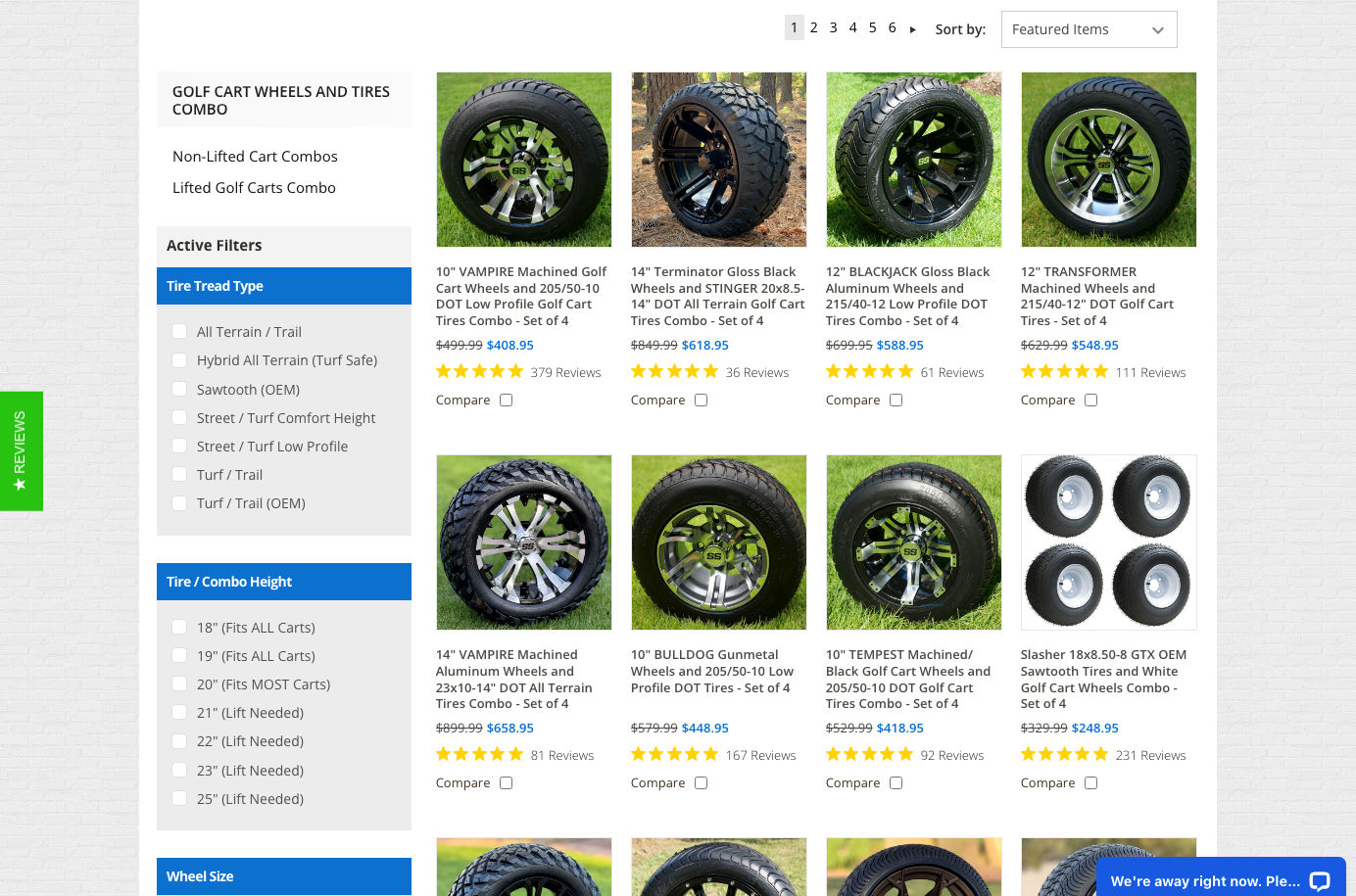
For example, Golf Cart Tire Supply does an excellent job showing the differences between the dozens of golf cart wheels and tires in its offer. By showing a clear image of each option (including spoke design and tire tread), it makes it easy for shoppers to choose the options they prefer. Moreover, information-rich product names, additional details, customer ratings, and advanced page filters work together to ease the selection process and guide shoppers towards options that fit their needs and preferences.
Source: golfcarttiresupply.com
Make Product Comparisons Easier with Helpful Visuals
Consumers don’t make shopping decisions before doing in-depth pre-purchase research. In fact, even when they plan on buying in-store, 23% of buyers still do online research beforehand. And what resources do they use to evaluate potential solutions to their pain points? Well, in addition to search data, social media, and AI, almost 30% of consumers also rely on price comparison websites.
These trends show that ecommerce buyers use product comparisons and buying guides because these help them evaluate and compare multiple solutions without jumping from one product page to another (or navigating between entirely different retailer websites).
So, how can you use visual product education and images to make this content format more user-friendly and valuable to your target audience?
One of the best strategies is to produce helpful visuals that highlight differences between options and make the entire evaluation process more intuitive.
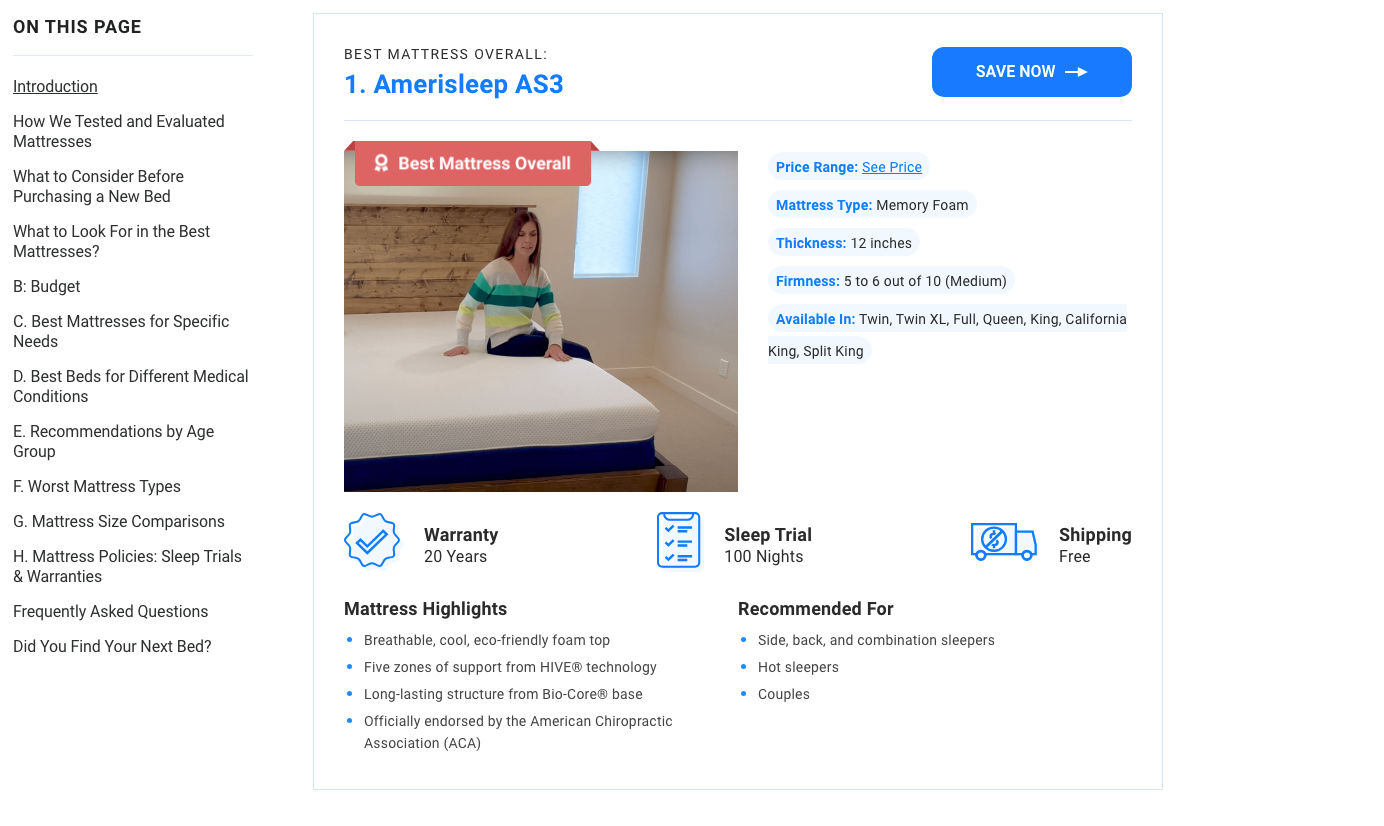
For example, pairing visuals with key product details, as Sleep Junkie does in its comprehensive best mattresses guide, is an effective tactic.
This approach works for several reasons. First, Sleep Junkie uses custom illustrations to direct shoppers’ attention to important customer experience factors like shipping, warranty, and trial period length. This alone ensures web visitors notice crucial CX elements and understand their importance before committing to a purchase. Second, the brand embeds video product reviews in the buying guide. This approach provides a deeper dive into each product option without forcing readers to navigate away from the comparison page.
Together, these two visual formats support the evaluation process, giving prospects a chance to capture all relevant product information before asking them to choose just one option from the list.
Source: sleepjunkie.com
Simplify Complex Product Information with Infographics
The efficiency with which brands communicate product information to potential customers largely depends on the industry know-how those leads have.
Some product features like general purpose or customer benefits can be described with words and images alone. But others, especially complex solutions, are far harder to market and sell.
So, when aiming to use visual product education to maximize understanding and build customer confidence, it’s worth exploring communication tactics that drive specific product knowledge.
For example, infographics can turn complex data into relevant, easy-to-understand selling points. And it’s not just because humans process visuals faster than words. Scientific research shows that imagery actively aids learning and boosts memorability, making it the perfect format to complement product descriptions for solutions that require a higher level of customer education to drive purchase intent.
With these findings in mind, one of the best ways to maximize product understanding and communicate value in highly technical and innovative industries is to simplify complex product information with illustrations, visual data representations, or even short animations.
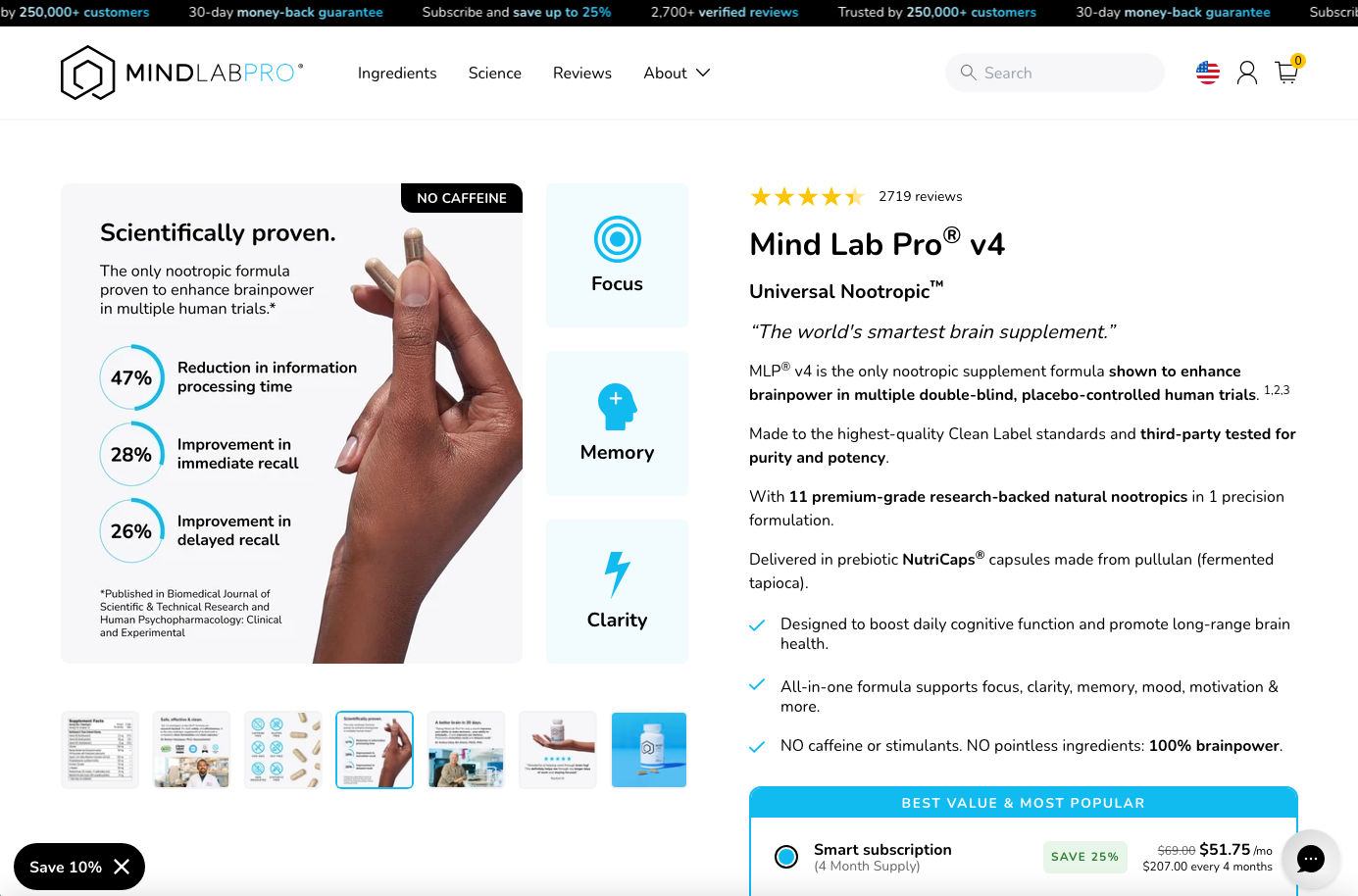
Mind Lab Pro does an excellent job implementing this product education strategy on its product pages. Instead of just telling potential customers that its nootropic brain supplement boosts cognitive function, this brand uses data visualization to communicate key product benefits and show how effective the solution is. So, by using an infographic to say that 47% of customers experience faster information processing, 28% see an improvement in immediate recall, and 26% witness better delayed recall, Mind Lab Pro ensures web visitors notice, understand, and remember these benefits and take them into account once they’re ready to make a final buying decision.
Source: mindlabpro.com
Help Customers Discover Products Through AI-Powered Visual Search
In some contexts, the best way to boost customer confidence and drive conversions isn’t to help them understand your offer. It’s to ensure your target audience finds precisely what they imagine as the ideal solution to their needs.
The reason for this is simple. Most consumers are developing banner blindness, and many actively ignore marketing messages that aren’t personalized. In other words, shoppers want to spend their hard-earned money on products that perfectly match their wants, needs, and preferences.
In some ecommerce verticals, matching what your customers want and the products you show them can be tricky. Not least because your prospects likely already have a clear idea of what their ideal solutions look like, especially if they’ve done their pre-purchase research on social media.
One of the best ways to support relevant product discovery in these cases is to use AI-powered visual search.
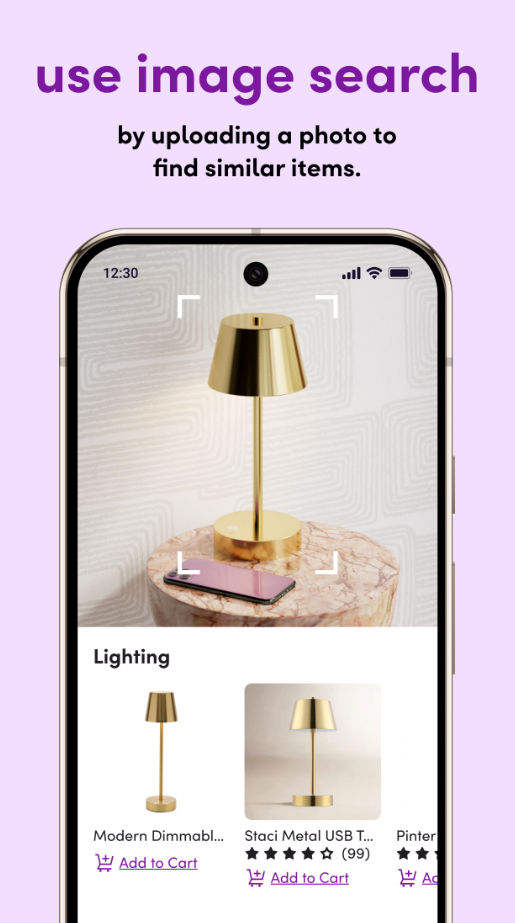
Yes, text-based searches can still help consumers find a good number of relevant hits. But if web visitors know exactly what they’re looking for, a tool like Lenso.ai is a much better way to help them discover exact product matches, visually similar products, and alternative solutions.
Brands like Wayfair already integrate image search into their website UI. In doing so, they speed up product discovery while simplifying the product evaluation process.
Source: play.google.com
Use Lifestyle Images to Show Products in Real-World Contexts
Studio product photography, illustrations, and advanced visual UX tactics all boost purchase intent and customer confidence. Still, not all shoppers look for staged visuals when evaluating products. Instead, many prefer to make buying decisions based on candid images that show products in realistic environments.
The reason why lifestyle photography depicting real-world contexts sells is relatively simple. It doesn’t just help product education by showing real-world, practical product use. It also overcomes common drawbacks of studio photography, namely proportions, purpose, suitability, and scale, all of which can become skewed in highly manipulated settings.
Furthermore, lifestyle photography includes social presences, which increases consumers’ emotional connection to brands and products. Plus, when it includes an aspirational note, this type of imagery can generate purchase intent where none existed before, especially among younger consumers (44% qualify as aspirational buyers).
For instance, Wyrmwood uses lifestyle-centric visuals to boost understanding of its innovative products. This brand’s approach shows why contextual images often say far more about a solution than a product description ever could. In addition to being highly attractive, the images and videos expertly depict the unique, varied capabilities of Wyrmwood’s modular gaming tables. They show difficult-to-communicate benefits, like helping users build and maintain friendships. Lastly, they depict the value of optional add-ons, helping the brand maximize AOV among web visitors who make a positive purchase decision.

Source: wyrmwood.com
Visual Product Education for Ecommerce Brands: What to Do Next?
The first step toward helping your target audience comprehend the value of your offer is to take a hard look at your product visuals. Are they attractive, high-quality, and clear in communicating the benefits of your offer? If the answer is yes, then you can move on to more advanced visual communication strategies like using reverse image search to improve website UX or maximize information retention with infographics.
However, if there’s room for your product photography to improve, start there. Even small changes can go a long way in better presenting your solutions. And remember, the best place to use visual assets isn’t just on your website and product pages but across your entire online presence, as the product discovery journey now involves multiple touchpoints that range from Google to AI to social media.

Author
Guest Post
Content Writer
Continue reading

General
The Best Reverse Image Search for Photographers. Set Up Copyright Notifications!
If you are a photographer looking for a smart way to find your copyrighted content shared online, this is the place for you! In this article, we will explain how you can search for your photos being reposted, and the best ways you can automate the searching.

General
Face Search API by lenso.ai for businesses: Top 5 Industries and use cases
If you run a business and wonder how to boost your user engagement or add a feature that may become a game changer – we do have a solution! You need to implement the face search API from lenso.ai. Check whether your use case may be a good fit for reverse face search integration.

General
How Teams Can Improve Their Image Search Skills with AI-Powered Tools
AI-powered visual tools are changing how photographers, digital marketers, content creators, and researchers work. In a single day, one person might trace the source of a photo, check a campaign image for duplicates, and look for similar visuals for a new project. The tools evolve quickly, and training often struggles to keep up.

General
Lenso.ai vs. Yandex. Reverse Image Search + Face Search Compared
Yandex and Lenso.ai are both reverse image search websites that are used by people wanting to find objects, places or people online. Is there a clear winner between the two? Who does what best? In this article, we will compare Lenso.ai and Yandex and we will try to select the website who performs better depending on your personal requirements.