
Preview in:
Lenso.ai Facial Recognition & Reverse Image Search API
Lenso.ai is the most versatile Reverse Image Search API due to the number of categories it offers. With lenso.ai, users can find more than just similar photos.
Why choose lenso.ai’s API?
- Ability to find people, places, duplicates of images, similar and related photos. All separated for the best results.
- Filtering by website URL
- Sorting options available - newest, oldest, best and worst match
- Easy setup
- Clear and simple documentation
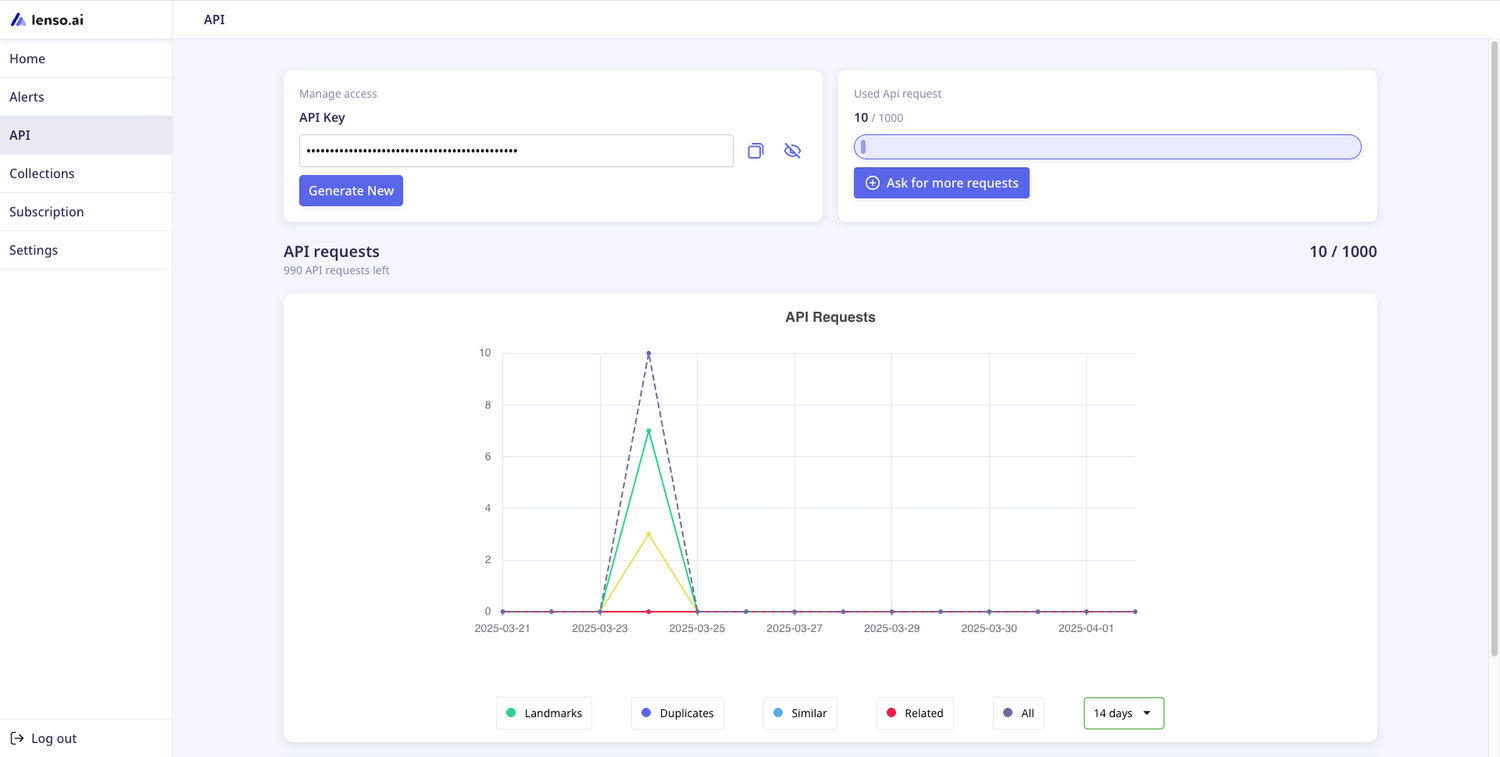
Lenso.ai’s API is more than just image search. It’s focused on delivering top-quality results and offers built-in facial recognition unlike any other reverse image search.
To check if lenso.ai’s API meets your expectations, go to lenso.ai Reverse Image Search and make a search! The API returns the same results.
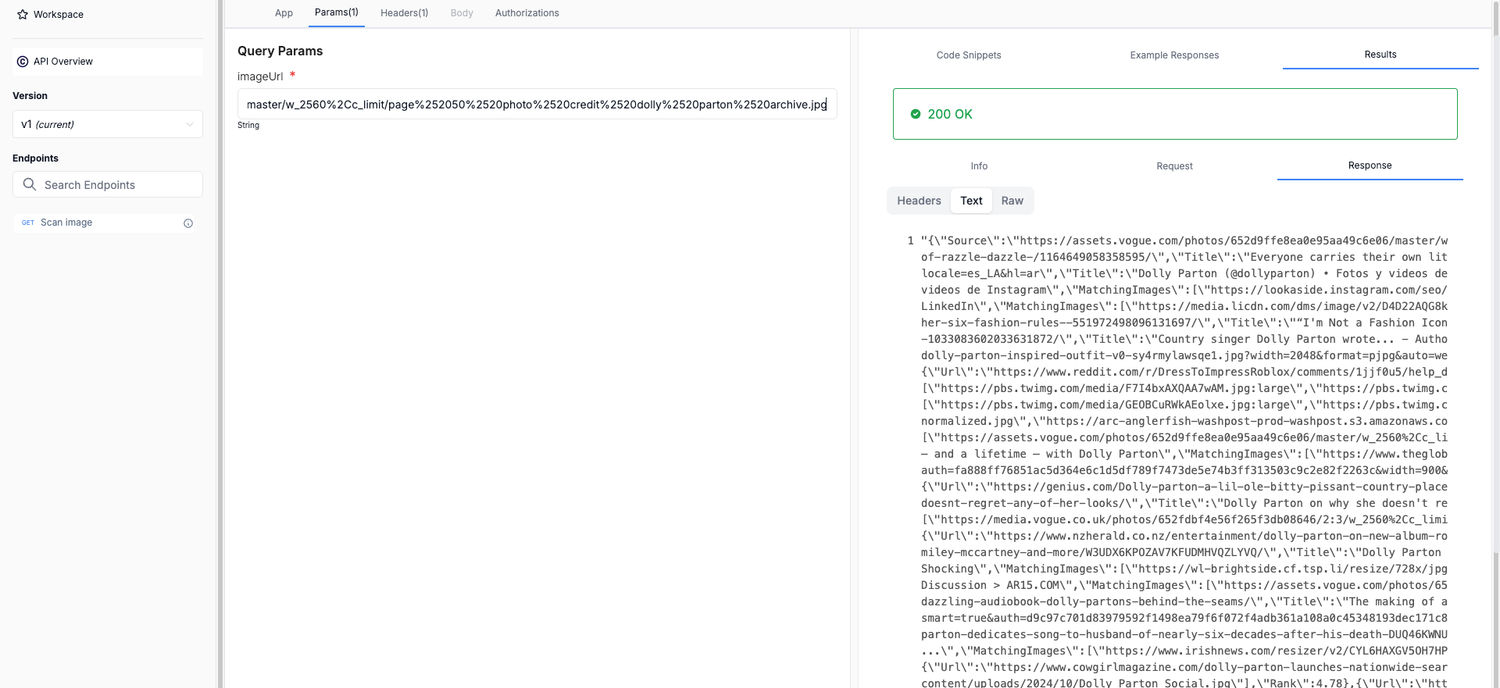
Copyseeker API
Copyseeker offers a great API through RapidAPI, with prices going from $0 to $300. For limited amount of searches, it’s a great similar image search API!
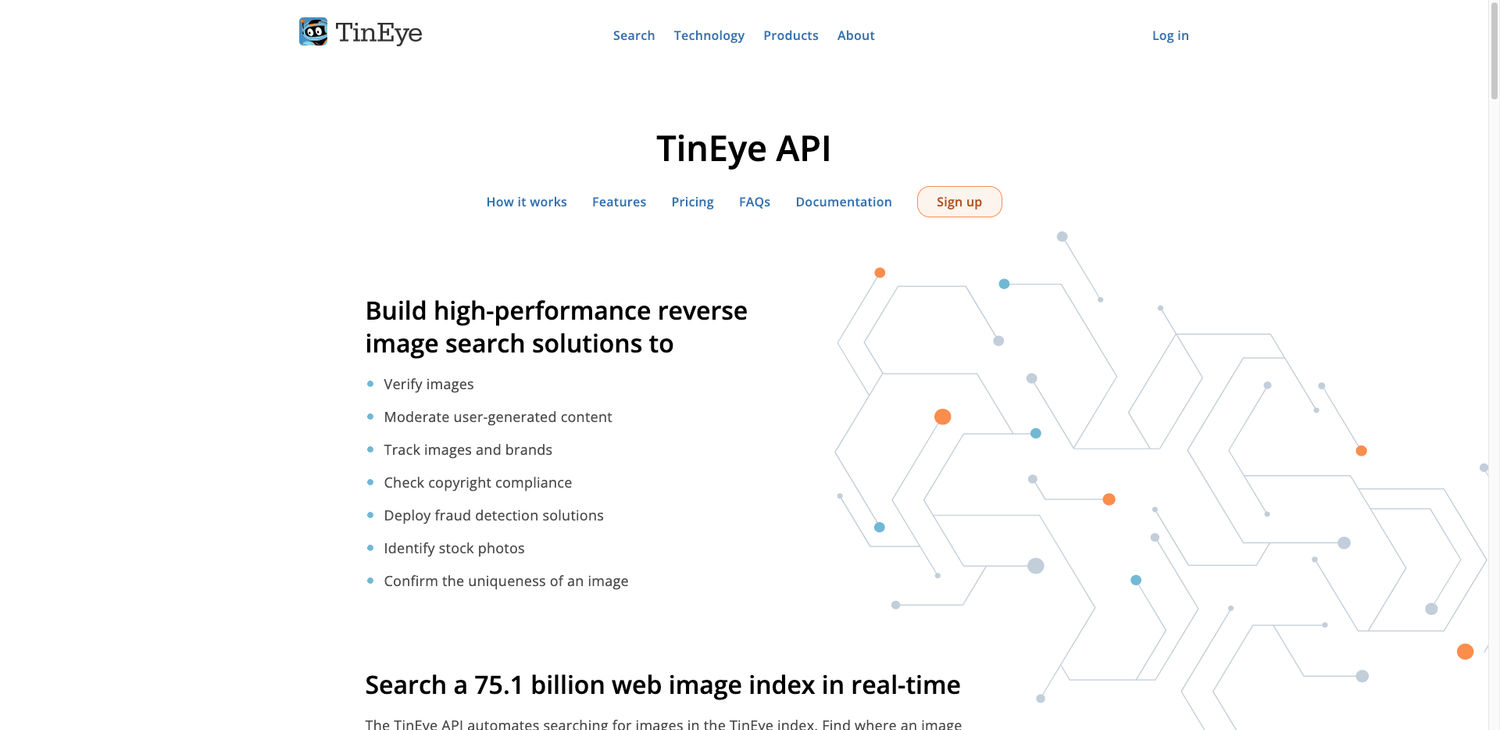
TinEye
TinEye is one of the most popular Reverse Image Search providers. Due to this, some use its API for image search. This API is paid, however, users can easily check if it meets their expectations by making a search on TinEye’s page.
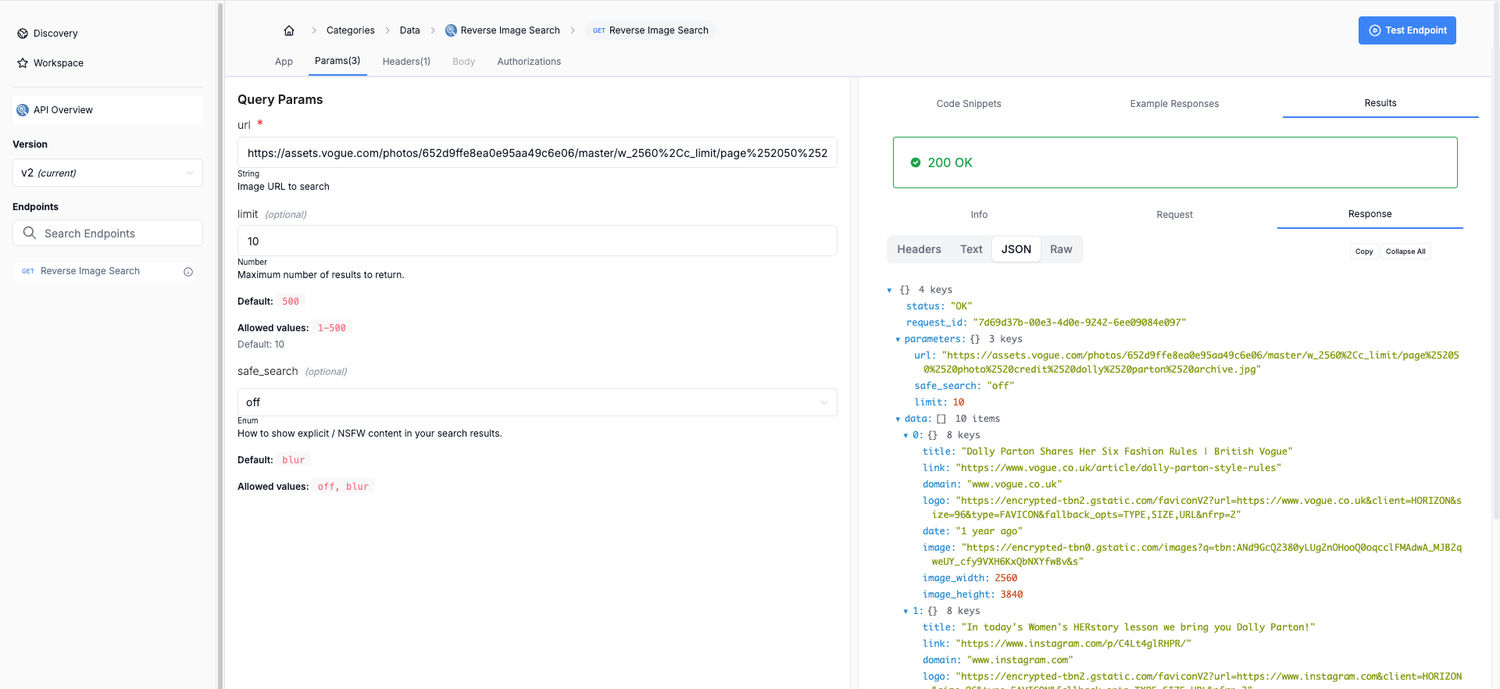
Reverse Image Search by OpenWeb Ninja
This image search has a free tier and works on RapidAPI. You can test it for free and find images online with good accuracy.
What is a Reverse Image Search API?
A Reverse Image Search API allows you to upload or link an image to find visually similar images or information related to it across the web or a database. It matches the input image to existing images using computer vision and machine learning, which can be implemented by an experienced AI developer.
What is a Face Search API?
A Face Search API detects and compares human faces in images to find matches within a database. It's commonly used for identity verification, surveillance, and photo organization.
How does Image Search API work?
An Image Search API uses AI-powered algorithms to analyze an image’s features—such as shapes, colors, and patterns—and compares them to indexed images in a dataset to return visually similar results or related metadata.
What can I use a Reverse Image Search API for?
You can use a Reverse Image Search API for verifying image authenticity, finding image sources, detecting copyright infringement, identifying products, or locating duplicates across the internet.
Any API you loved? Share this article to let others know!

Author
Kinga Jasinska
Marketing Specialist
Continue reading

General
How Teams Can Improve Their Image Search Skills with AI-Powered Tools
AI-powered visual tools are changing how photographers, digital marketers, content creators, and researchers work. In a single day, one person might trace the source of a photo, check a campaign image for duplicates, and look for similar visuals for a new project. The tools evolve quickly, and training often struggles to keep up.

General
6 Useful Tools for Finding Similar Images and Exploring Visual Matches
An image can communicate an idea in seconds, but sometimes the picture itself raises more questions than it answers.
General
Lenso.ai vs. Yandex. Reverse Image Search + Face Search Compared
Yandex and Lenso.ai are both reverse image search websites that are used by people wanting to find objects, places or people online. Is there a clear winner between the two? Who does what best? In this article, we will compare Lenso.ai and Yandex and we will try to select the website who performs better depending on your personal requirements.

General
AI-Powered Image Tools: From Finding Photos Online to Preparing Them for Official Use
Have you ever looked at a photo and thought where else it might have been used online? Or maybe you need a ready-to-submit passport photo in a short time and have no clue how to get it right? The problem in both cases is that you have to find the right photo and know how to prepare it for official use.

General
Best Online Tools for Image Search and Digital Research
Finding the right information online is not always as simple as typing a few words into a search engine. Sometimes the information you need is contained in an image, while in other situations you may need to work with numbers or technical data to understand what you have found. The right online tools can make these tasks faster and more manageable. For people who regularly work with visual content, research, or digital information, here are some useful tools worth considering.