Preview in:
Traveling has never been easier, and with the power of advanced AI image search technology, you can uncover places you've never heard of or even rediscover locations you may have forgotten. It’s like having a digital map that remembers every place you've been or want to explore.
Thanks to the reverse image search tool as lenso.ai, finding desired locations becomes even more easier and precise.
How to find location from a photo with a reverse image search tool? - short guide
Check our latest post about finding locations and buildings from pictures. Obscure solutions!
1. Start reverse image search with lenso.ai
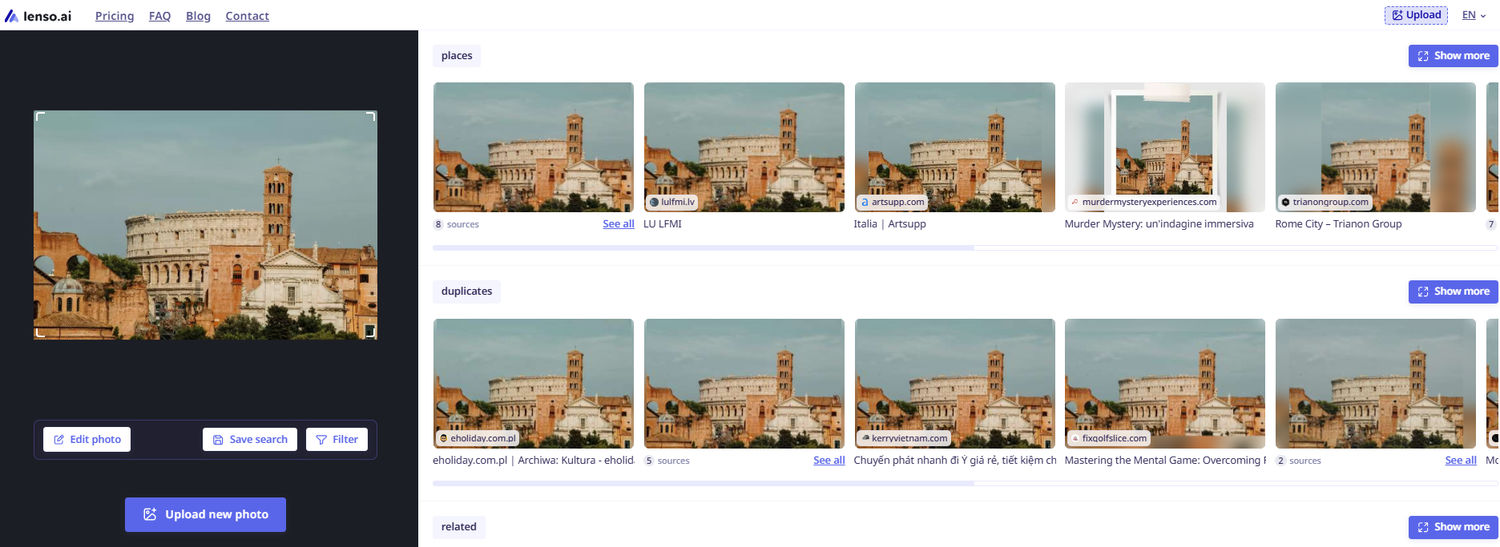
Go to lenso.ai and upload the image of the place you want to locate. Feel free to use edit options to crop/rotate an image - sometimes it may be helpful. Remember to upload a high resolution image, it definitely will increase chances to find the exact locations.
FInd out how to reverse image search on an iPhone?
2. Explore “Places” category but not only that
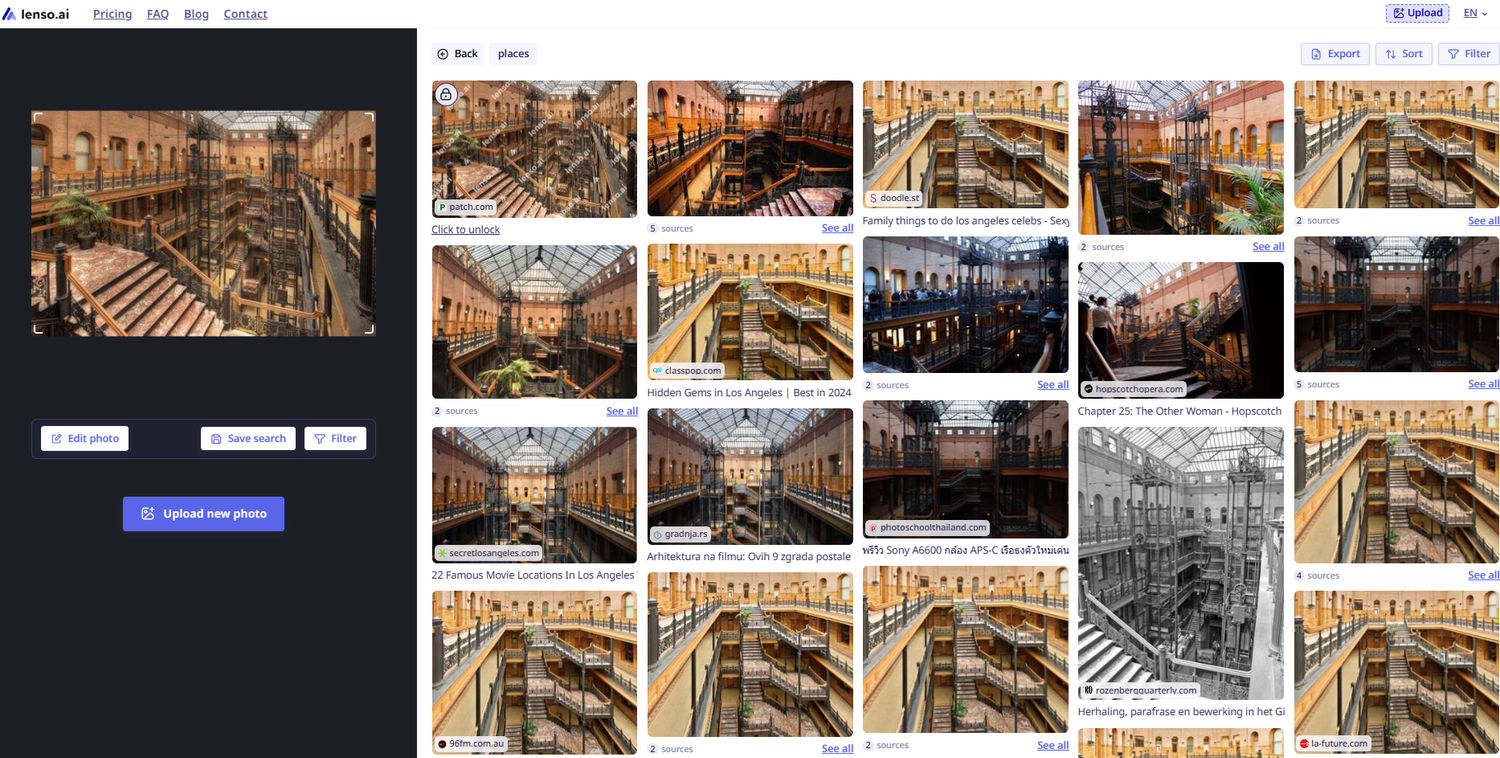
With the “Places” category you will be able to find the most relevant results. If the location or building is well-known, you’ll probably find it in the “Duplicates” category. Alternatively, we recommend to search in “Similar” or “Related” categories for an in-depth analysis of the location.
3. Pinpoint specific area/building on the image
If you have an image with multiple places on it, it is better to focus on a specific one and start a new reverse image search using only that specific place. This would specify the search and probably it would help to locate the place quicker.
4. Save pictures to Collections
If you are performing a large and in-depth search, it would be helpful to create an account on lenso.ai and save images that you found to a Collections.
More information how to do it here: How to Add Pictures to Collections on lenso.ai?
5. Check the URL sources
The final step is to check the image URL source. Sometimes the same image may appear on several websites. Thanks to that you will be redirected to the page with information about the place or even with exact location.
6. Filter/sort results
If all steps above are not helping enough, try additional filter/sorting options.
Filter by:
- Keyword - provide selected keywords
- Domain - search only on a specific website by providing its URL
Sort by:
- Newest/Oldest
- Best/Worst match
- Random
- Shuffle (diversify results even more)
Thanks to lenso.ai, you will be able to discover the location from any photo. Within its advanced AI technology, variety of categories, filters and sorting options, lenso makes it easier to uncover the desired location from your image.

Author
Julia Mykhailiuk
Marketing Specialist
Continue reading
Guides
How to find the perfect fall photoshoot location from a photo?
Fall is the perfect time for a new photoshoot, whether you want to create fresh content for your personal social media accounts or promote your product or brand with an authentic fall vibe. But first, you need to find the right place. Find out how to discover the perfect fall photoshoot location from a photo.

Guides
What to do in the first ten minutes after you find your own face in a reverse image search?
Finding your own face in a reverse image search is a strange feeling. Not usually because the result is sinister, most of the time it is a conference photo, an old profile picture, a team page from a job you left in 2019, but because you did not put it there and you did not know it was there.
Guides
Is your match real? Reverse image search a dating profile
Dating apps are probably the go-to solution for finding a potential date, but unfortunately, they can also be one of the riskiest options. How can you make sure your match is real? Do a reverse image search and find more information using their dating profile picture.