Preview in:
Key points:
- How do I search for images on lenso from my phone or desktop?
- What categories does lenso.ai offer?
- How do I set up alerts?
- How do I sort images?
- How do I filter images?
- How do I unlock search results?
- How do I see the source of a photo?
- How do I turn on the Research Mode?
- How do I save search results to Collections?
- How do I get access to lenso.ai's API
How do I search for images on lenso from my phone or desktop?
- Navigate to lenso.ai.
- Upload your image on the main page.
- Take a look at the All category to get a general idea of what results you can find, or enter a specific category to find more results.
- To see the sources, you need to unlock results.
What categories does lenso.ai offer?
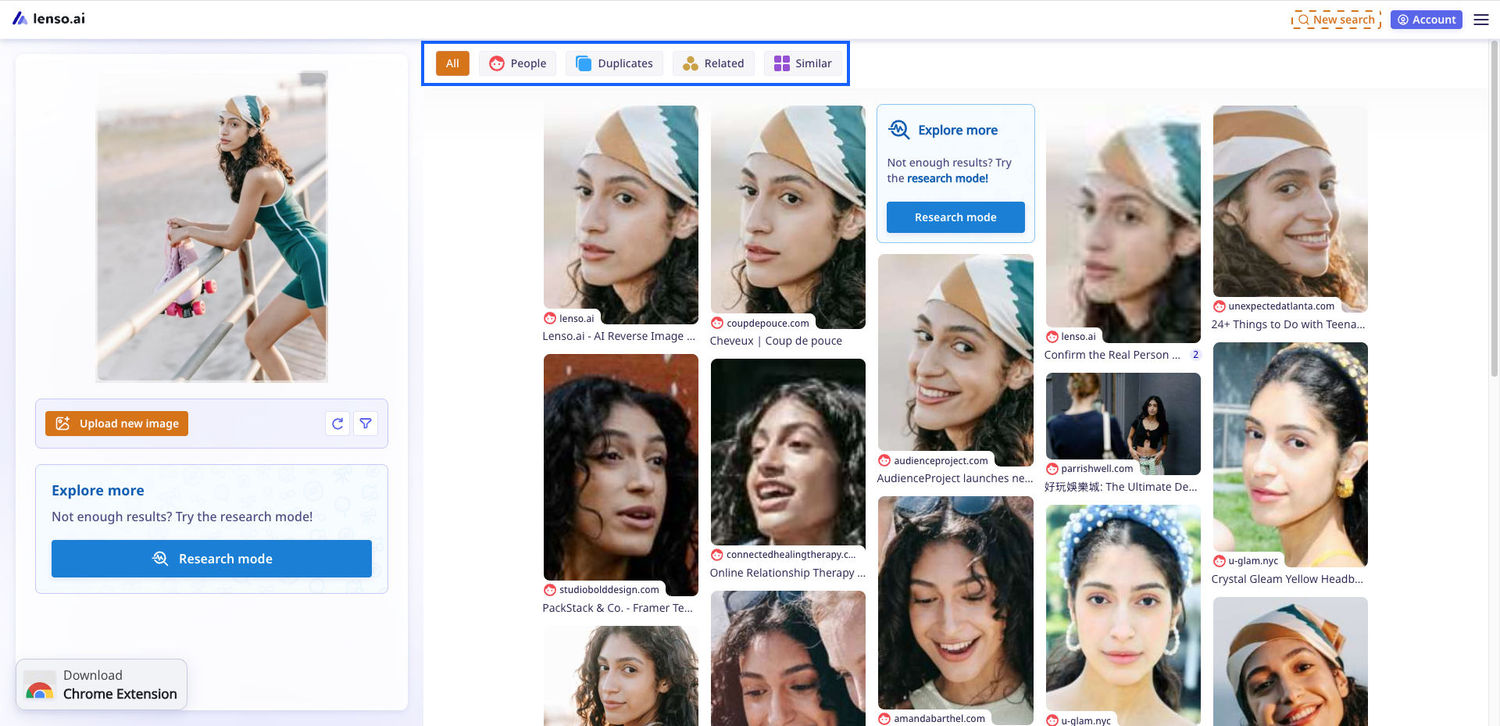
Once you perform a search, you’ll be able to explore lenso’s categories, such as:
- People - The same people in different environments; AI-powered face search trained to recognize facial features regardless of accessories, hairstyles, or expressions.
- Duplicates - Duplicates of the uploaded image, as well as edited, cropped, or filtered versions of it; allows you to find the original version of an altered or edited picture.
- Places - Similar landscapes, buildings, or locations.
- Similar - Images that are similar to the uploaded image but not necessarily duplicates; photos with a similar layout integrated in all sorts of content like flipbooks, flyers, presentations, and graphics that look alike.
- Related - Images that are related to the uploaded image but not necessarily visually similar; photos that are correlated with the original image.
The categories can be chosen from the tabs above the results.
Learn more about categories on lenso.ai from this video:
What are alerts, and how do I set them up?
Alerts include email notifications and notifications on your user profile.
How to set up an Alert?
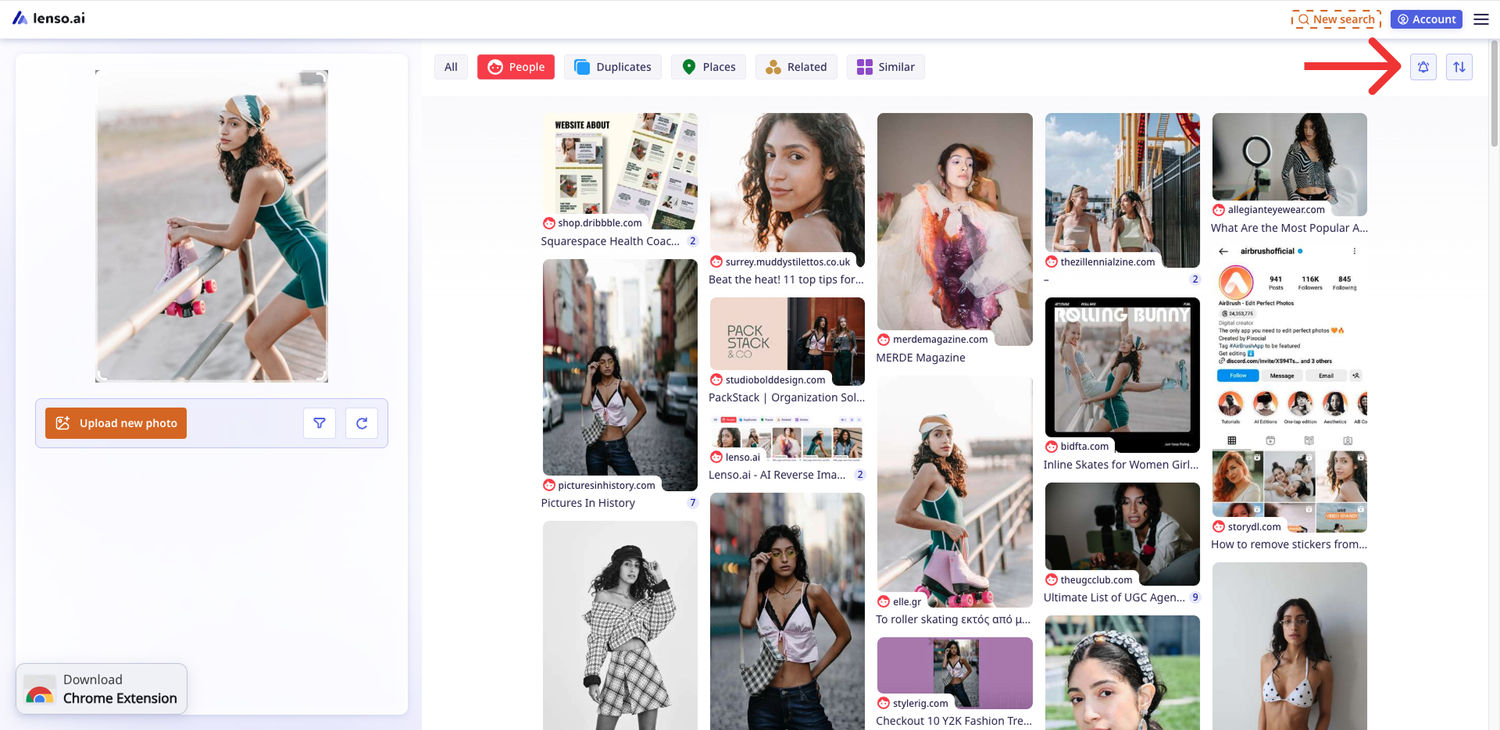
- Open lenso’s Reverse Image Search and upload a picture.
- Expand the category you’d like to set up an alert for.
- In the top right corner, choose the “Alert” or the bell icon.
How to set up an alert on mobile?
You can find the bell icon in the top panel:
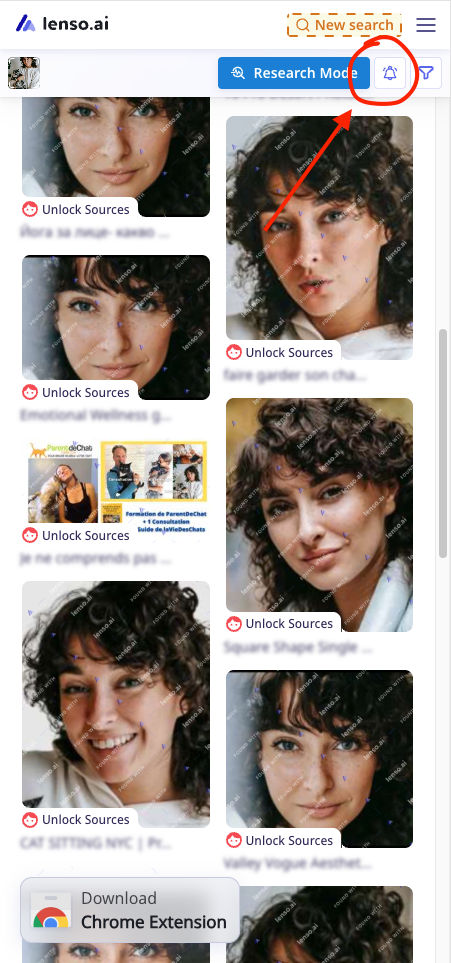
- Once you click the icon, you will be asked to choose the category and name the alert. You can name it whatever you like - only you can see the alerts you set up.
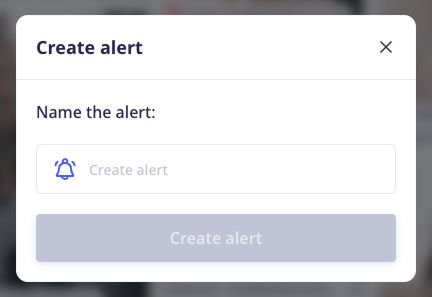
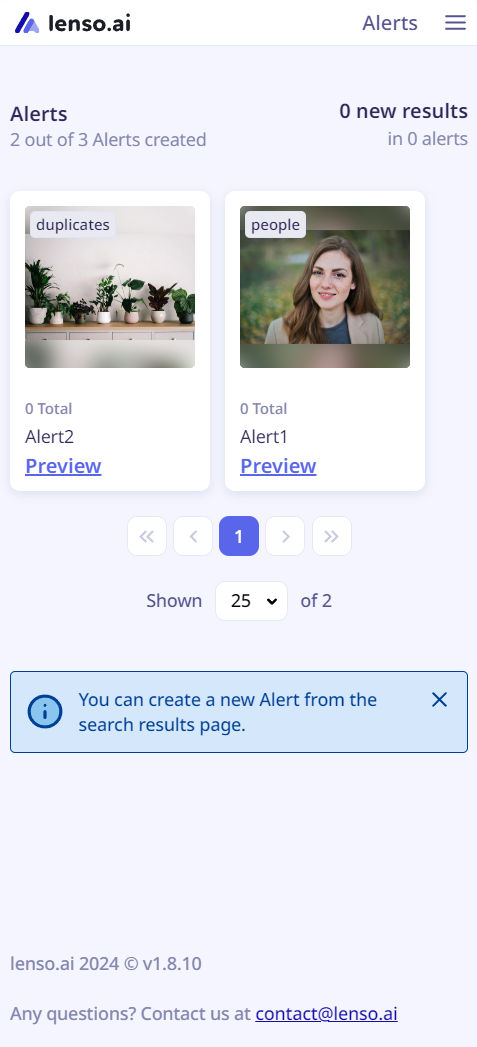
- The alerts you set up will be visible in your user panel. You will also get email notifications whenever we find a match.
How do I sort images?
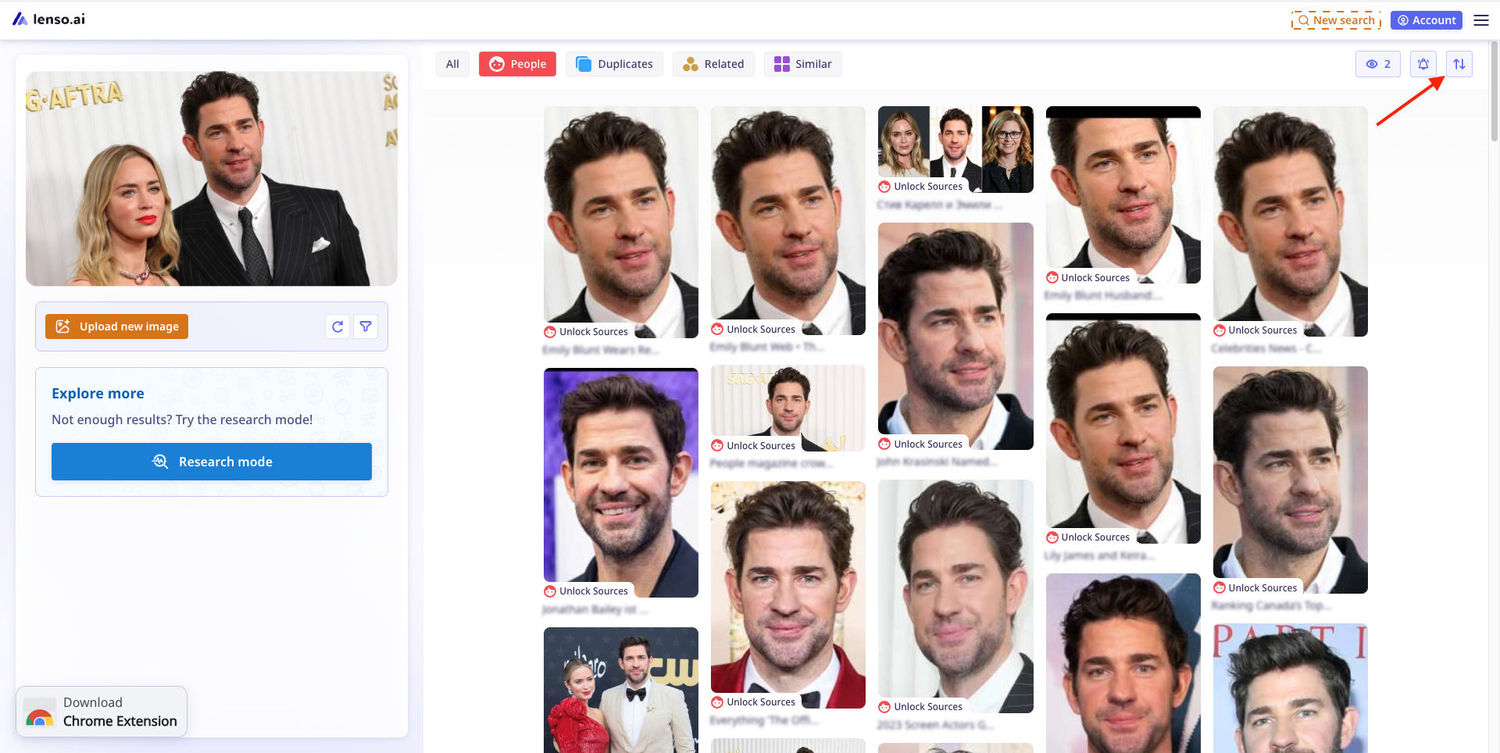
Opening categories allows you to sort through images that lenso found. You can find the sorting option in the top-right corner once you open the category.
- Newest/Oldest - Sort pictures based on the date of indexing.
- Best/Worst Match - Sort based on how well the image matches the pictures in the index.
- Random - Sort randomly for more diverse results.
- Diverse results - Shuffle to make the results more diverse; find the same people or places in different arrangements.
How do I filter images?
Filtering pictures on lenso makes it easy to find exactly what you’re looking for. The filtering option can be found in the left-side panel of the image search.
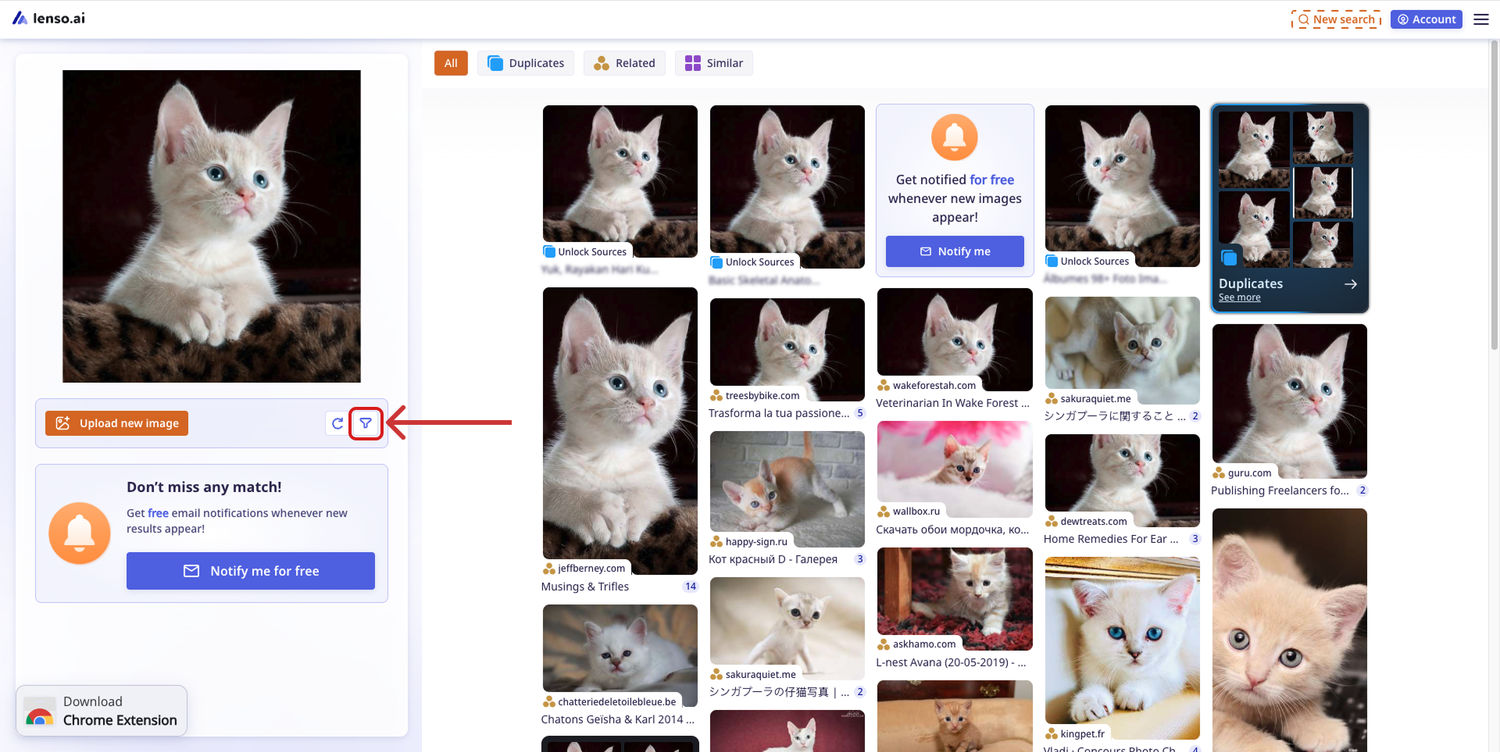
Lenso allows you to filter by:
- Text - Search by keywords; upload a blue mug and try the keyword “red” to find red mugs.
- Domain - Search only on a specific website by providing its URL.
Tips:
- Use only English words with Text search.
- Use only top-level URLs for Domain search. For example, use "lenso.ai" instead of "https://lenso.ai/blog".
How do I get access to Advanced Filters?
Advanced filters are available only in the Research Mode.
To get access to Advanced Filters, you need to purchase the Professional subscription.
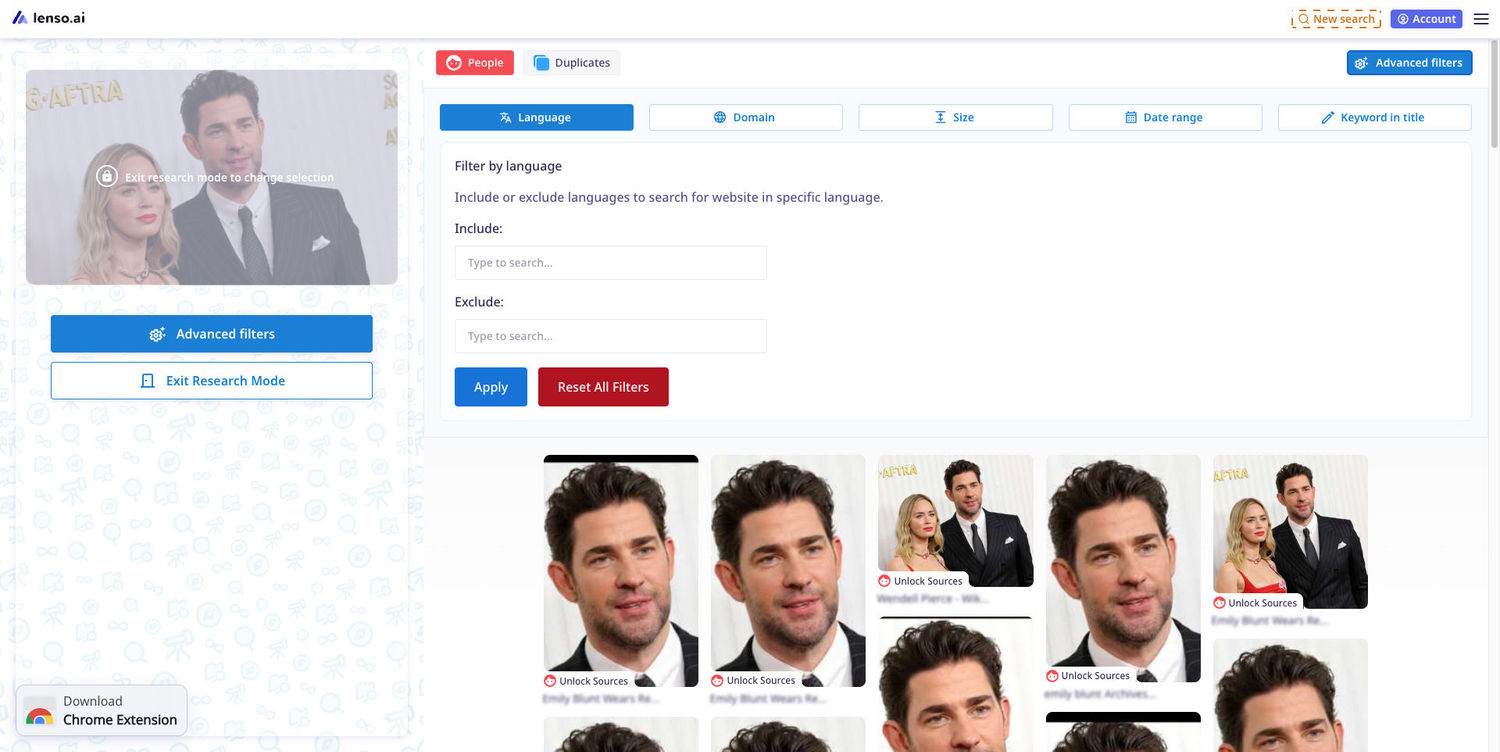
Advanced Filters - all filters explained
Those include:
- Language - Include or exclude languages to search for the website in a specific language.
- Domain - Include or exclude domains to search for photos posted on specific websites.
- Size - Choose the definition of the results.
- Date range - Choose the date range to see results that were indexed before or after a specific date.
- Keyword in Title - Find a specific word in the page title.
How do I unlock search results?
To see sources and full images, you need to unlock them via lenso.ai.
To unlock the result in your search:
- Click the image link you're interested in. A paywall will open.
- Choose the subscription that suits your needs. Keep in mind each subscription model offers a different number of unlocks, alerts and extra features.
- Make a new account or pay as a guest.
- Make a safe and secure payment. You'll receive the invoice via email. If you registered as a guest, you will receive your password via email as well.
- The result is now unlocked! You can see the source.
If you'd like to set up your account first, here's how:
- Create an account by clicking the account icon in the top-right corner.
- Once your account is set up, check the pricing page and choose the option that suits your needs.
- Make a payment and receive the invoice via email.
- Unlock the result.
How to see the source of an image?
See the source on desktop
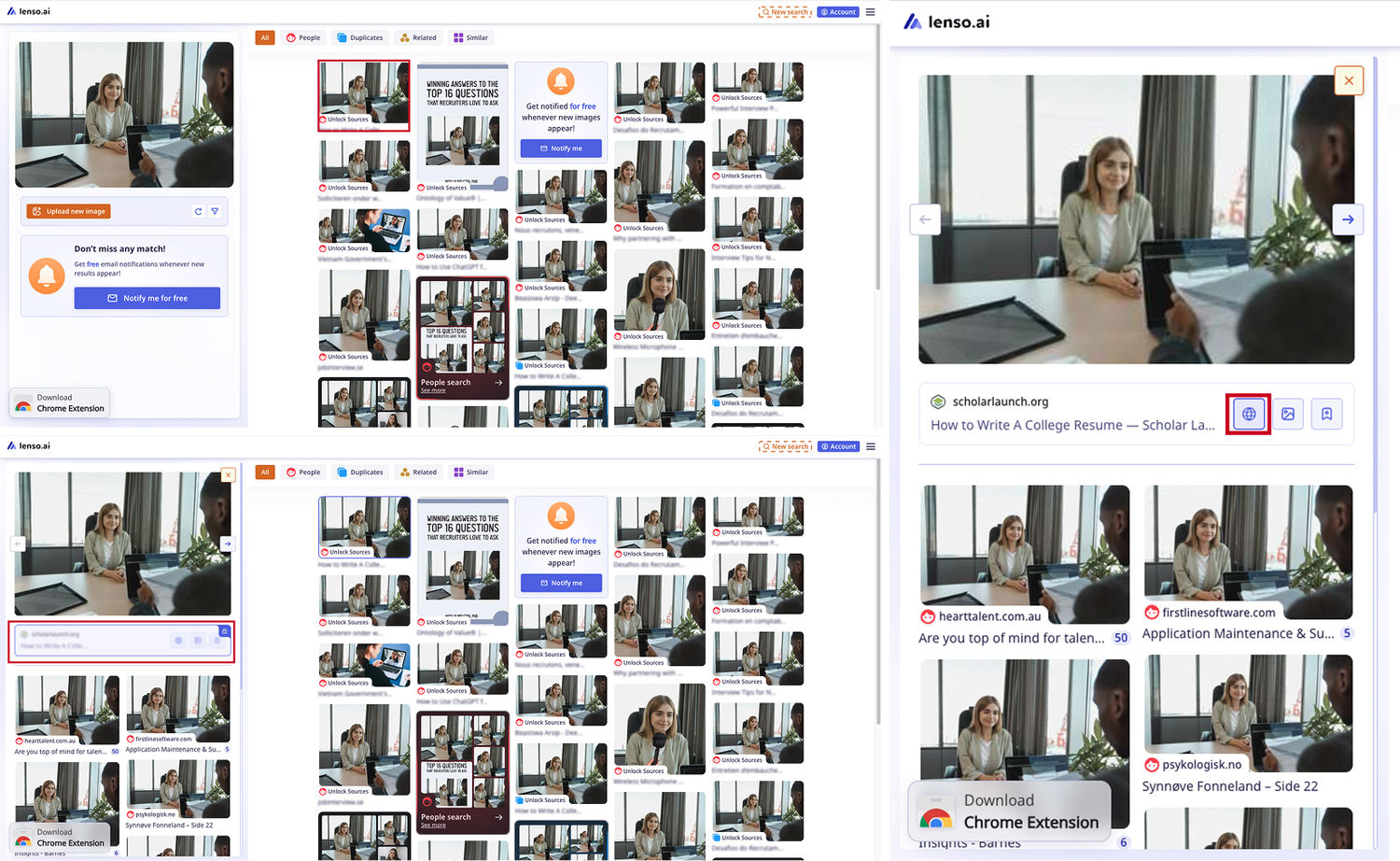
To find the source of your image, click on the page URL in the corner of the picture or the text at the bottom. To open the image in a new tab, click on the thumbnail.
For images with multiple sources, click see all and choose the image icon to open the image in a new tab, or click on the source link to open the website.
How to see the source of results on mobile?
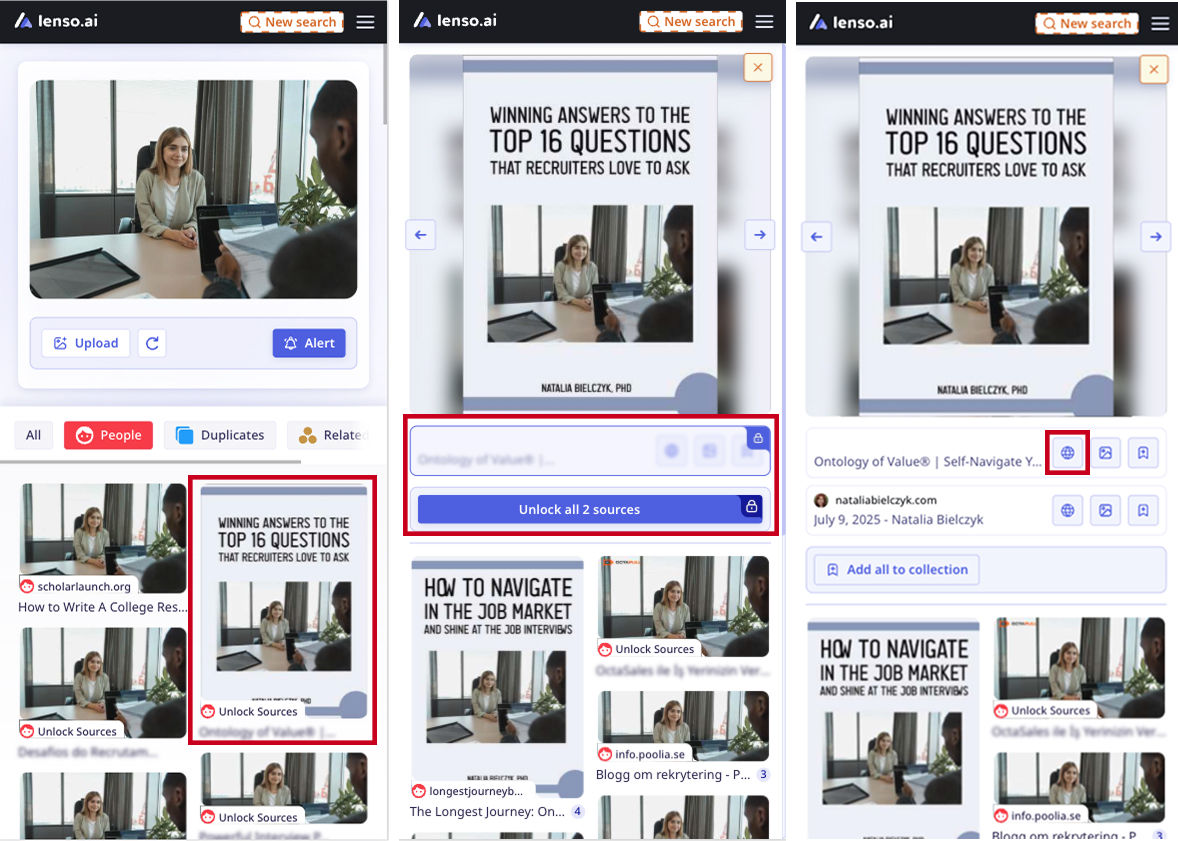
- Tap on the result you’d like to unlock
- In the panel that opens, tap on the blurred container
- That will unlock your image; you can now open the source by clicking the web icon, or open the image in a new tab by clicking the image icon
Here’s a video tutorial on how to do it:
Where to find unlocked results?
The result will be saved automatically in your Collections.
Since the number of unlocks is limited, you can check how many unlocks you have in the right-hand corner of your user panel.
How do I turn on the Research Mode?
Research Mode is a feature that lets you find more results in the search and filter the results with Advanced Filters.
To use the Research Mode, you need the Professional Subscription.
What is Research Mode?
Learn all about Research Mode from our video tutorial:
How do I save search results to Collections?
If you find a search result that you like, you can save it to Collections. Here’s how:
- Upload and search your image.
- If there’s only one source of the image, click on the small Bookmark button.
- If there are multiple sources, choose See all. To save only one individual result, click the bookmark button next to that specific source. If you'd like to save all sources, select the "Add all to collection" text.
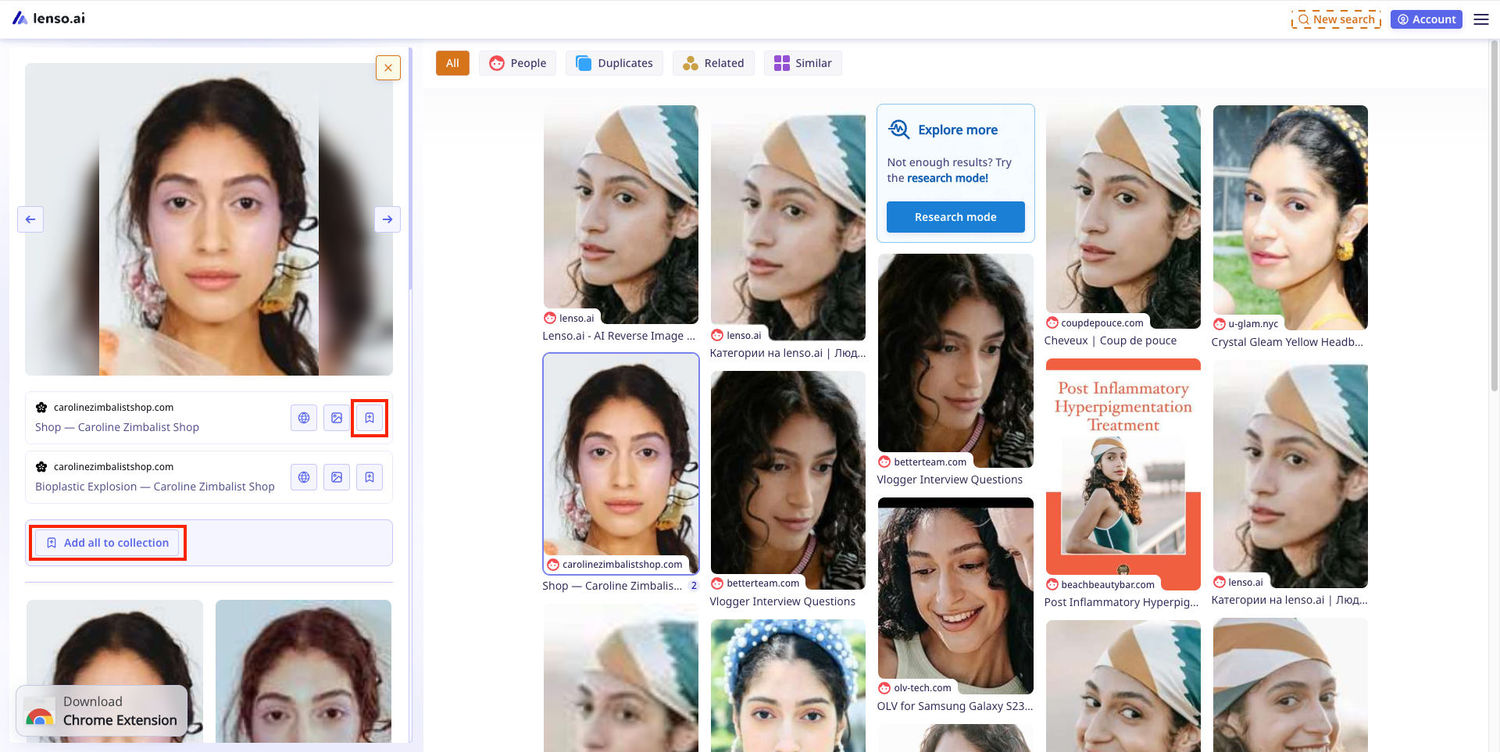
You can add images to existing collections or create new ones. Find the collections you’ve already saved on your profile.
How do I get access to lenso.ai's API
To use lenso.ai's Reverse image search and Face Search API, you need a Developer subscription. The API allows you to use lenso.ai in your own applications.
Read more about lenso.ai's API
Learn More about the API from the tutorial below:
Other issues
If you still have questions regarding the use of lenso.ai, email us at [email protected].
You can also watch this tutorial to find out what lenso.ai offers:

Author
Kinga Jasinska
Marketing Specialist
Continue reading
Guides
How to find the perfect fall photoshoot location from a photo?
Fall is the perfect time for a new photoshoot, whether you want to create fresh content for your personal social media accounts or promote your product or brand with an authentic fall vibe. But first, you need to find the right place. Find out how to discover the perfect fall photoshoot location from a photo.

Guides
What to do in the first ten minutes after you find your own face in a reverse image search?
Finding your own face in a reverse image search is a strange feeling. Not usually because the result is sinister, most of the time it is a conference photo, an old profile picture, a team page from a job you left in 2019, but because you did not put it there and you did not know it was there.
Guides
Is your match real? Reverse image search a dating profile
Dating apps are probably the go-to solution for finding a potential date, but unfortunately, they can also be one of the riskiest options. How can you make sure your match is real? Do a reverse image search and find more information using their dating profile picture.