
Preview in:
What Is a Face Search Tool?
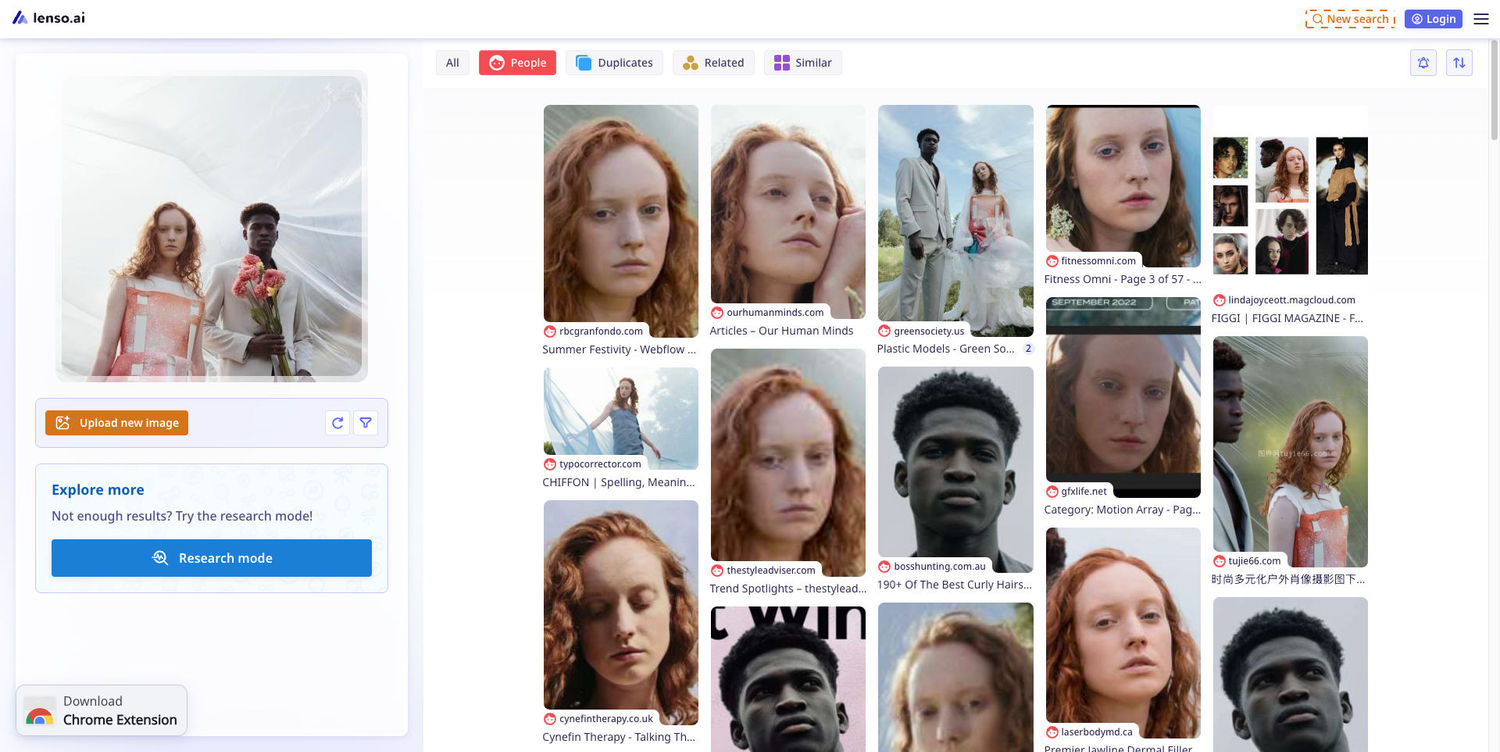
You probably know face search. It’s a system that finds people on the internet based on their photos.
In simple terms: you upload a photo of yourself, and face search tools find you on other websites.
How Do You Build an AI Model?
Let’s start with hardware - For bigger AI models, developers usually use computers with multiple powerful GPUs. GPUs can do many mathematical calculations at the same time.
Then, developers write code. Python and AI frameworks such as PyTorch or TensorFlow are commonly used for defining what the model should learn and what data is used for training.
Once the code is ready, they collect images and train the model. The model is shown huge numbers of examples. At first, its answers are mostly wrong. Each time it makes a mistake, its internal settings - called weights - are adjusted slightly, until the results are satisfactory.
Below, we will explain how AI face search models find and compare faces in images, and how images are found online.
How Does Facial Recognition Work?
Facial recognition works in a few steps. Here’s the simplest explanation:
1. Recognizing a face in a photo
The first step is finding the face in the uploaded image. The system detects where the face is and separates it from the background and other objects in the photo.
How are Facial Recognition Models taught?
Facial Recognition models are trained using large numbers of face images. During training, the AI learns which facial features are useful for telling people apart. Over time, the model learns to recognize similarities between different photos of the same person.
Simply said: you “feed” AI so many images that it learns to tell them apart.
2. Facial characteristics analysis
After the first step, AI analyzes the face. It finds the distances between each feature. Then, it returns a mathematical representation of its findings.
3. Converting the face into a vector
Instead of storing information such as "large eyes", the system represents these characteristics using numbers. This makes it much easier and faster for computers to compare one face with millions of others.
4. Comparison
AI compares the facial features it detected with the faces found in the index or a database. Faces with similar vectors are considered possible matches.
The system can then calculate a similarity score and show the closest results first.
Crawlers - how images get collected
For a face search engine to find images, it first needs to build an image index. This is done using web crawlers.
Crawlers are automated programs that visit publicly accessible webpages. When an image is found on such a page, the search engine adds it to its index. If a face is detected, the system can create a facial vector that can later be compared with uploaded photos.
Facial Search Models vs LLMs - Is It the Same Thing?
There is some confusion regarding face search and LLMs, so here’s a simple answer.
No, facial search models and LLMs are not the same thing, although both are types of AI models.
LLMs are models that generate text - such as Chat GPT or Google Gemini.
Therefore, face search tools like lenso.ai or eyematch.ai are not LLMs, but rather reverse image search engines that use their own AI Models.
Lenso.ai is also a non-generative AI - not an LLM. You can learn more about the differences between generative and non-generative AI in this article: Generative AI vs. non-generative AI - what are the differences?

Author
Kinga Jasinska
Marketing Specialist
Continue reading

News
Lenso.ai One-Time Payment: Reverse Image Search Without a Subscription
If you want to make unlocks on lenso.ai, but you don’t want to be tied to a subscription, here’s a solution you should consider: one-time payment. With one-time payments, you can purchase the product once, make unlocks and decide if you want to switch to a full plan later! This article explains how you can access the one-time payment and all the benefits it offers.

News
Using facial recognition and reverse image search for public security intelligence
Public security intelligence should implement and use only the best and most advanced tools that can help during the investigation process and provide support at different stages. How can facial recognition and reverse image search help?

News
Top 10 Reasons Why Lenso.ai Is the Best Face Search Tool Online
There are multiple facial search tools available on the internet. Most of them cost a lot, but do very little. Others provide low quality of results, show paywalls before the search even starts, or reel customers in by false advertising. Lenso.ai is the best facial search tool online, and here are some of the top reasons that prove it.

News
How Reverse Image Search Catches Stolen Before-and-After Photos in Home Service Marketing
A tree service in one state removes a storm-damaged oak, photographs the cleanup, and posts the before-and-after shots on Instagram. Eighteen months later, a company three states away is running the exact same photos as their own work on a Google Business Profile, cropped slightly and stamped with a different logo. Nobody at the original company notices, because nobody's looking. Nobody at the second company worries about it, because nobody's ever gotten caught.

News
Best ClarityCheck Alternatives in 2026 | Online Person Lookup Tools
Checking whether a person online is legitimate is a challenge when you lack the right tools. Websites like ClarityCheck offer a simple and quick way of verifying people online. All it takes is an email, phone number, username or a photo, and you can discover hundreds of sources related to the person you are talking to. In this article, we will show you the most helpful tools that can be a great alternative for ClarityCheck - they look for faces, names, emails, phone numbers and more!