Preview in:
Even if you think it’s nearly impossible to protect your work online because it can be spread and misused billions of times, there are still legal steps you can take to prevent potential copyright infringement.
The sooner you take copyright protection action, the higher your chances of being overlooked by potential infringers.
How to protect your work online?
Even if you don't actively share your work online, there is still a high chance that someone could misuse it — or even claim it as their own.
To prevent this, it is highly recommended to follow a few copyright protection steps that can minimize potential online risks. It's also important to take action regularly to stay protected.
Here are a few steps that can help you protect your work online
- Use copyright image search tools daily to track where your work appears online
- Monitor your work regularly using reverse image search tools. For example, lenso.ai offers an alert feature that notifies you when new duplicates of your images are detected online
- Register the copyright of your work
- Place watermarks on your images (you can use free tools like Watermarkly for this or edit your photos in an image editor)
- Always include a copyright notice or sign when sharing your work
- Take legal action when necessary, such as issuing a DSA form, if your work is used without permission.
Copyright Laws Regarding Images - How to Protect Your Business?
How to protect your work online with copyright image search tools?
Thanks to reverse image search tools that also allow copyright image searches, you can quickly find any potential misuse of your work. Basically, all you need is an image of your work.
Lenso.ai is an example of a copyright image search tool that can help you discover where your work appears online — complete with specific URLs.
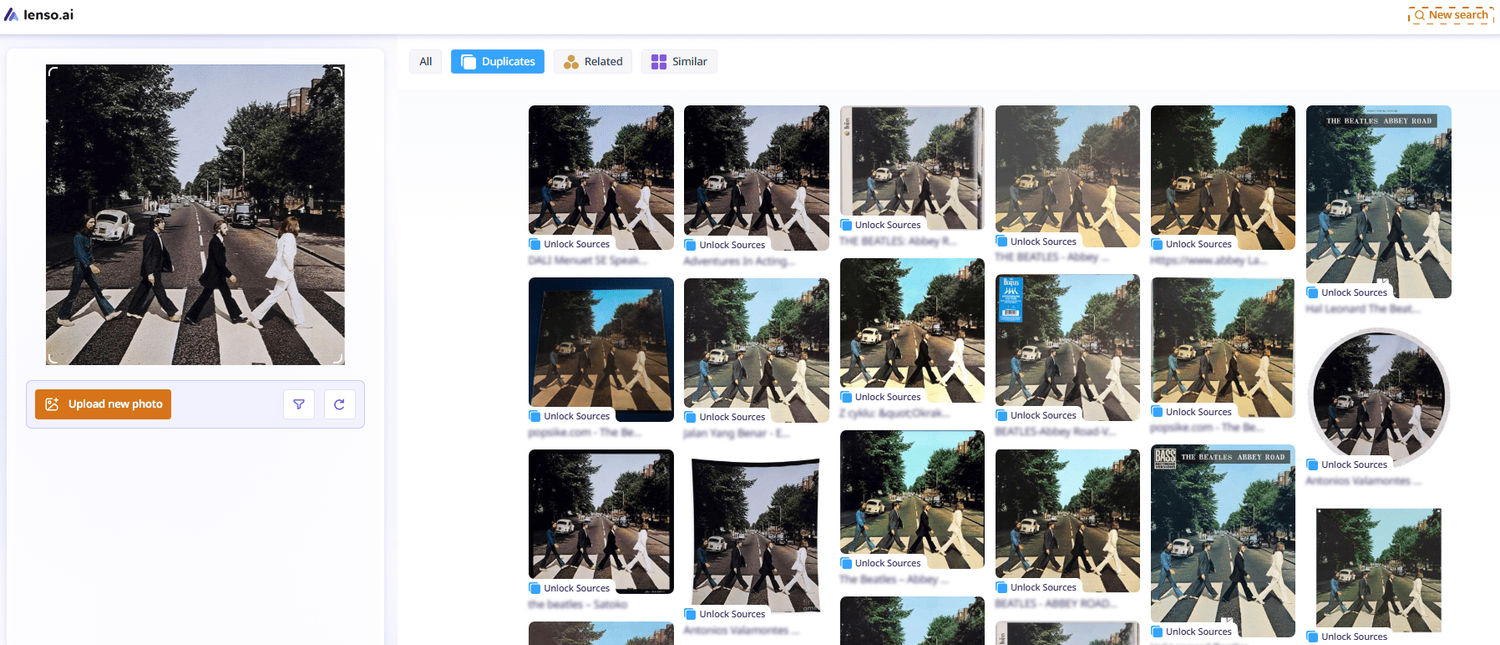
How can lenso.ai help you find potential copyright infringement?
Follow these steps:
- Go to lenso.ai
- Upload an image of your work
- Find relevant results under the “Duplicates” category
- Explore other categories (People, Places, Related, SImilar images) for a more in-depth search
- Use filters (by keyword or domain) to narrow down results
- Sort results by newest, oldest, best match, worst match, or random
- Explore the original source URLs to investigate further
If you want to prevent potential copyright misuse in the future, create alerts on lenso.ai for specific images. You’ll then receive email notifications as soon as new matches appear under the “Duplicates” category.

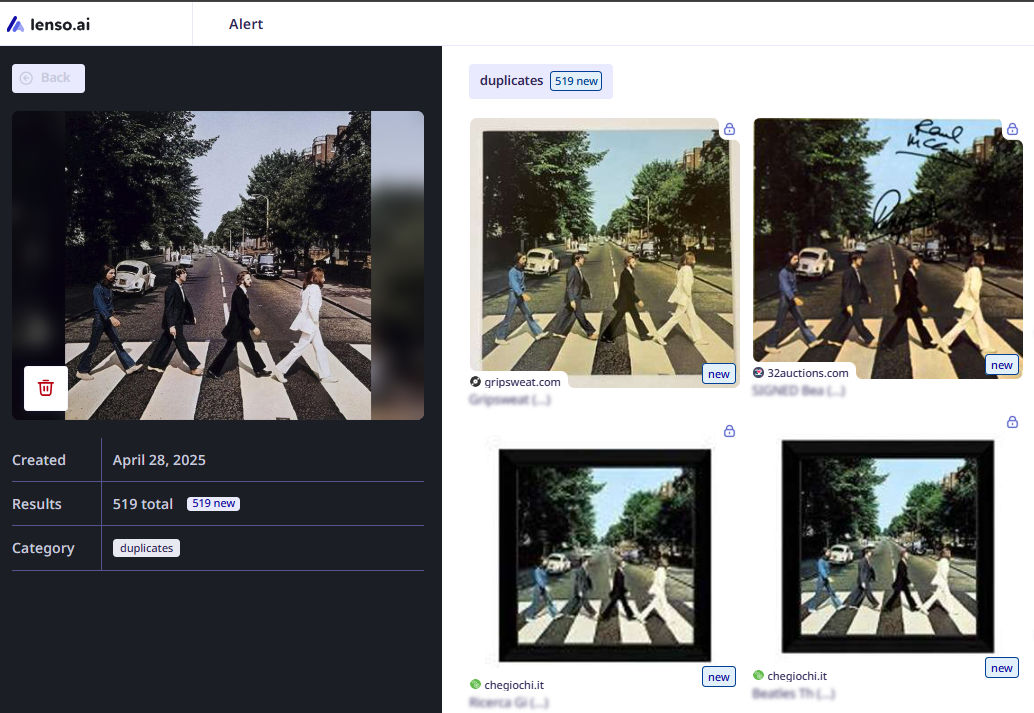
Here’s an example of how lenso.ai can help online creators effectively protect copyrighted content:
Copyright protection for photographers with lenso.ai: How a reverse image search tool may help you?
Beside lenso.ai, there are some alternatives for image copyright & duplicate finders.

Author
Julia Mykhailiuk
Marketing Specialist
Continue reading
Guides
How to find the perfect fall photoshoot location from a photo?
Fall is the perfect time for a new photoshoot, whether you want to create fresh content for your personal social media accounts or promote your product or brand with an authentic fall vibe. But first, you need to find the right place. Find out how to discover the perfect fall photoshoot location from a photo.

Guides
What to do in the first ten minutes after you find your own face in a reverse image search?
Finding your own face in a reverse image search is a strange feeling. Not usually because the result is sinister, most of the time it is a conference photo, an old profile picture, a team page from a job you left in 2019, but because you did not put it there and you did not know it was there.

Guides
Is your match real? Reverse image search a dating profile
Dating apps are probably the go-to solution for finding a potential date, but unfortunately, they can also be one of the riskiest options. How can you make sure your match is real? Do a reverse image search and find more information using their dating profile picture.