Preview in:
Copyright Act of 1976 - General Rules of Copyright in the US
The Copyright Act of 1976 is the basis for all copyright-related laws in the US.
What is included?
According to the section 102 of the Act, the works of authorship protected by the Act include:
- literary works;
- musical works, including any accompanying words;
- dramatic works, including any accompanying music;
- pantomimes and choreographic works;
- pictorial, graphic, and sculptural works;
- motion pictures and other audiovisual works;
- sound recordings; and
- architectural works.
What is excluded?
The copyright does not include any idea, procedure, process, system, method of operation, concept, principle, or discovery. Here’s why.
There are a few more minor exclusions. You can read more about them here.
Exclusive Rights
Section 106 granted these exclusive rights to copyright holders:
- Make copies of the work (on paper, CD, digital files, etc.).
- Create new works based on the original (like a remix, movie version, or translation).
- Sell, rent, or give away copies of the work to the public.
- Perform the work in public (like playing music, acting out a play, or showing a movie).
- Show the work in public (like displaying art or images from a film).
- Play sound recordings online or through digital audio (like streaming music).
What is considered an infringement?
Copyright infringement occurs when someone violates one of the exclusive rights. Usually, when someone creates a "copy" of a protected work that is "substantially similar" to the original. Infringements require copying. If two people happen to write exactly the same story, without knowledge of the other, there is no infringement. Source.
Fair Use
Certain uses of a copyrighted work are allowed without permission. Examples include using the work for criticism, commentary, news, teaching, research, or scholarship.
To decide if something is fair use, courts look at:
- Why and how the work is used – Is it for education or profit?
- What kind of work it is – Is it more creative or more factual?
- How much of it is used – Is it just a small part or a big chunk?
- Impact on the original's market – Will it hurt the original creator’s ability to sell or earn from their work?
Even if a work hasn’t been published, it can still be used fairly if all these points are considered.
Find your copyrighted images online
Copyright infringements happen daily. To protect your work, consider using copyright protection tools, such as lenso.ai.
How to use lenso.ai for copyright protection?
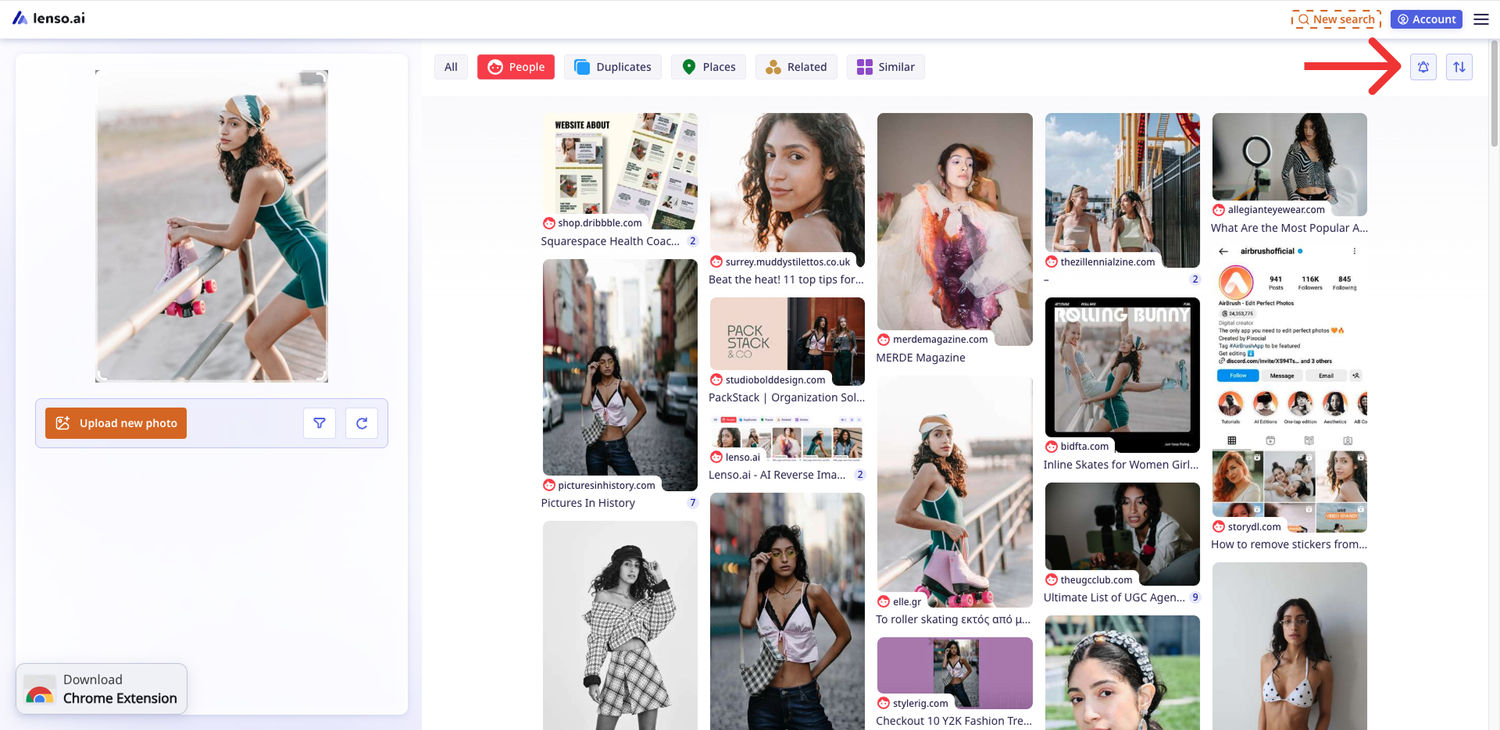
Making a reverse image search
Go to lenso.ai and upload your image on the main page. Lenso.ai will show all the matches for your photo in the Duplicates category.
Set up an alert
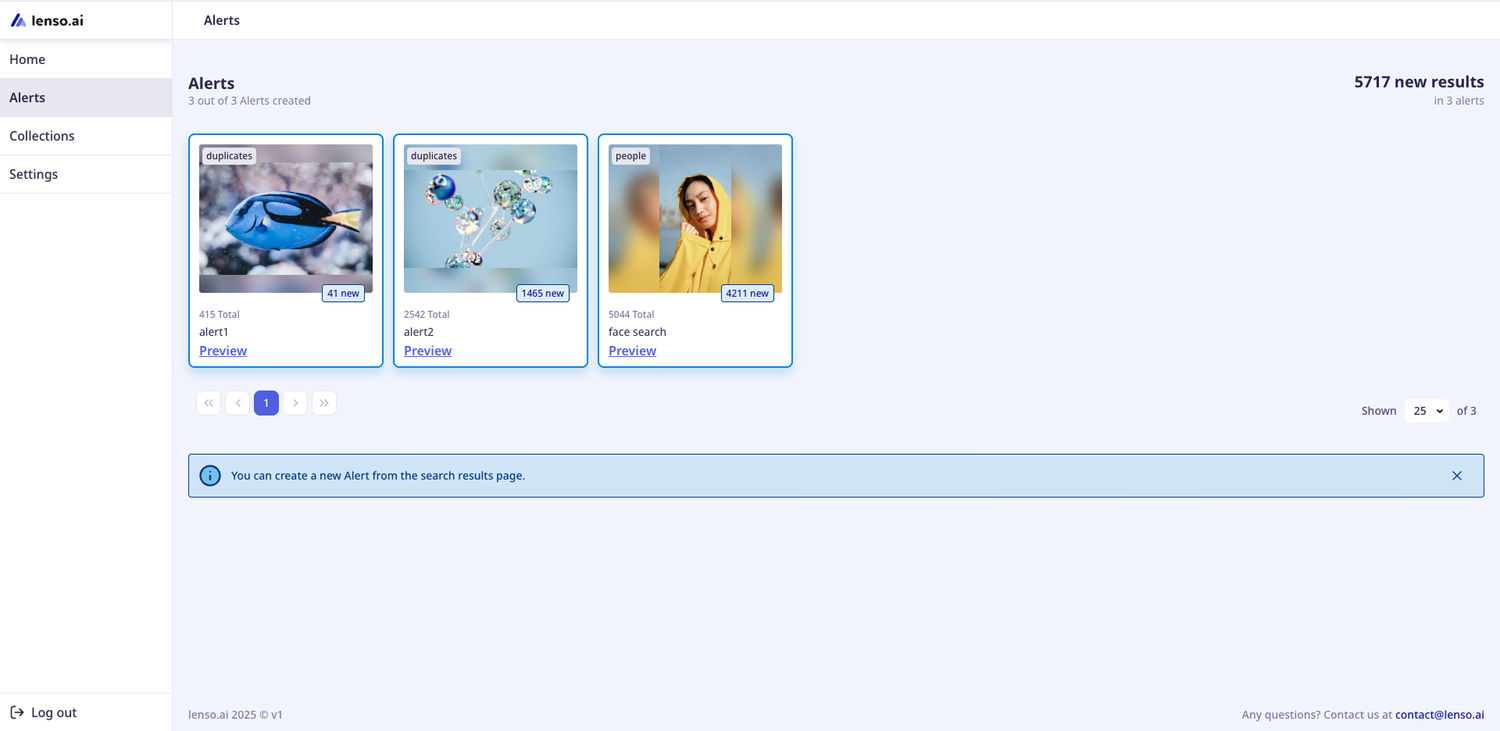
To get notified whenever lenso.ai finds your image, set up an alert. Click on the alert icon in your search to do that. Lenso.ai will send you emails every time it finds a match, and you will also see your alerts in your user panel.
Who owns the Copyright?
The author is usually the first copyright owner. But if the work is a "work made for hire," then the employer or person who ordered the work owns the copyright.
Multiple Authors
- Joint Work - If two or more people work together with the intent to combine their contributions, they share the copyright.
- Collective Work - This is a collection of separate works (like an encyclopedia). Each author keeps the copyright to their own part, unless they sign it away.
Copyright Transfers and Licenses
There are 3 ways to let others use your copyrighted work:
- Assignment - Complete transfer of ownership (must be in writing).
- Exclusive License - Only the license holder can use the work in certain ways (must also be in writing).
- Non-Exclusive License - Allows use by others; doesn’t need to be written and can be implied.
How long does the copyright last?
Copyright usually lasts for 70 years after the author’s death. If the work is a "work for hire", copyright lasts for 120 years from creation or 95 years from publication - whichever is shorter.
For works made before 1978, the rules are more complex. But as a general rule, anything published before January 1, 1930 (except sound recordings) is now in the public domain.
How to register your copyright?
- Copyright is automatic when someone creates an original work - registration is not required. However, registering a copyright gives extra benefits:
- You must register to file a lawsuit
- It allows for higher damages in court
You can register online with the U.S. Copyright Office.
When registering, you must submit a copy of your work. This helps prove ownership in a lawsuit and adds to the Library of Congress collection.
Filing a lawsuit
Federal courts can hear copyright infringement cases (except for some old sound recordings covered by state law).
To sue, the owner must prove:
- They own a valid copyright (an original work fixed in a physical form).
- The other person copied parts of their work.
- The copying was improper (not allowed by law).
You must register before suing.
To prove misappropriation, the owner must show:
- The copied parts are protected by copyright
- The audience would see the new work as substantially similar to the original
More about copyright
If you’d like to learn more about copyright laws, here are some articles you may want to check out:
- Copyright protection for photographers with lenso.ai: How a reverse image search tool may help you?
- Copyright Laws Regarding Images - How to Protect Your Business?
- EU regulation for using AI technology - what should you know?
- How to protect your work online with copyright image search tools?
- US regulation for using AI technology - what should you know?
Find us on YouTube!

Author
Kinga Jasinska
Marketing Specialist
Continue reading

News
Lenso.ai One-Time Payment: Reverse Image Search Without a Subscription
If you want to make unlocks on lenso.ai, but you don’t want to be tied to a subscription, here’s a solution you should consider: one-time payment. With one-time payments, you can purchase the product once, make unlocks and decide if you want to switch to a full plan later! This article explains how you can access the one-time payment and all the benefits it offers.

News
Using facial recognition and reverse image search for public security intelligence
Public security intelligence should implement and use only the best and most advanced tools that can help during the investigation process and provide support at different stages. How can facial recognition and reverse image search help?

News
How do Face Search Tools Work? Facial Recognition AI Models Explained.
Have you ever used a facial search tool and wondered how it works? In this article, we will explain the basics of facial recognition and tell you how face search websites build their own AI for face search engines.

News
Top 10 Reasons Why Lenso.ai Is the Best Face Search Tool Online
There are multiple facial search tools available on the internet. Most of them cost a lot, but do very little. Others provide low quality of results, show paywalls before the search even starts, or reel customers in by false advertising. Lenso.ai is the best facial search tool online, and here are some of the top reasons that prove it.

News
How Reverse Image Search Catches Stolen Before-and-After Photos in Home Service Marketing
A tree service in one state removes a storm-damaged oak, photographs the cleanup, and posts the before-and-after shots on Instagram. Eighteen months later, a company three states away is running the exact same photos as their own work on a Google Business Profile, cropped slightly and stamped with a different logo. Nobody at the original company notices, because nobody's looking. Nobody at the second company worries about it, because nobody's ever gotten caught.